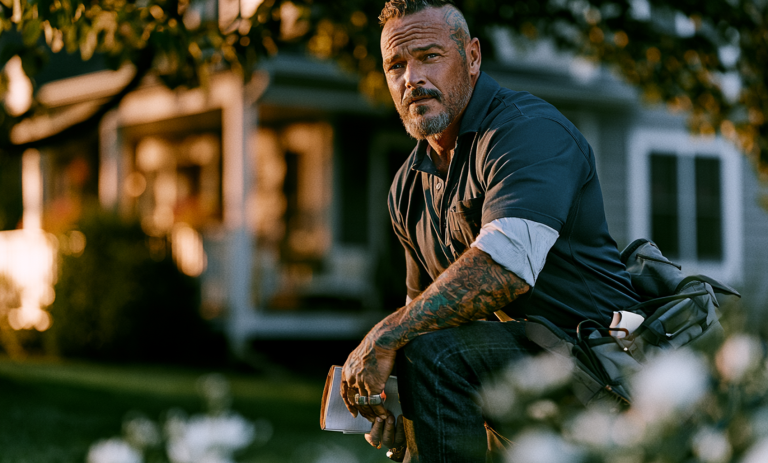
A reader wrote to us with a question a lot of people are afraid to ask out loud. He has a felony conviction from 2013. His wife is disabled. They have been married thirty-one years. Can he be paid to care for her through IHSS — and can she sign something to make it possible?
The answer is more hopeful than most people expect, and the details decide everything. California does not shut out everyone with a record. It excludes people convicted of a short, specific list of offenses, for a limited number of years, with several ways out. Here is how the system actually works, which forms control, and which deadlines will end the conversation before it starts if you miss them.
The short version
- A felony conviction by itself does not disqualify you. California screens for two short, specific lists of offenses — not for felonies in general.
- Neither list is a lifetime ban. Both are 10 years from conviction, or from release if you served time.
- A Tier 2 conviction that has been expunged under Penal Code § 1203.4, or cleared by a certificate of rehabilitation, no longer disqualifies you at all.
- If you are denied, there are three separate remedies with three different deadlines: 10 days, 45 days, and 60 days.
- Tier 1 convictions have no waiver and no exception — only the passage of 10 years.
A felony conviction, by itself, does not disqualify you
Every IHSS provider applicant submits fingerprints for a California Department of Justice criminal background check. That requirement comes from Welfare & Institutions Code § 12305.86, and you pay for it yourself.
But the county is not looking for “a felony.” It is looking for convictions that appear on two specific lists written into state law. If your conviction is not on one of those lists, it does not block your enrollment — regardless of how serious it was, how it felt at the time, or what else appears on your record.
| Tier 1 — W&IC § 12305.81 | Tier 2 — W&IC § 12305.87 | |
|---|---|---|
| Which offenses |
|
|
| How long it lasts | 10 years from conviction, or from release if incarcerated | 10 years from conviction, or from release if incarcerated |
| Recipient can sign a waiver | No | Yes — SOC 862, within 10 calendar days |
| You can request a general exception | No | Yes — SOC 863, within 45 calendar days |
| Expungement or certificate of rehabilitation clears it | No — no such provision in the statute | Yes — § 12305.87(c) |
The difference between the tiers is not how serious the crime is. It is what options you have afterward. A Tier 2 conviction can be waived, excepted, or cleared. A Tier 1 conviction cannot.
A 2019 CDSS regulation package (MPP § 30-778, issued through All County Letter 19-64) reportedly widened the Tier 2 list to include non-violent property crimes — a category that does not appear in the statute.
We could not retrieve the regulation text to confirm the exact wording, and are relying on a Legal Services of Northern California summary. If your denial notice cites a property offense, ask the county which specific regulation subsection it is applying, and get legal help.
Both bars last 10 years — not forever
This is the most common and most costly misunderstanding. Neither list is a lifetime ban. Both statutes exclude a person “for 10 years following a conviction for, or incarceration following a conviction for” a listed offense. After that decade, the exclusion no longer applies.
For a 2013 conviction with no time served afterward, that decade has already run out.
The statute’s cross-reference for violent felonies reads “subdivision (a) of Section 667.5,” while every CDSS form and notice says 667.5(c). Penal Code § 667.5(a) is a sentencing provision that points to the list of violent felonies in § 667.5(c), so both readings land on the same list. Nothing practical turns on it.
The route that clears a Tier 2 conviction outright
This provision sits in the middle of the statute and rarely comes up in conversation, and it is the most powerful thing in this article. Welfare & Institutions Code § 12305.87(c) says an application “shall not be denied” under the Tier 2 rules if either of the following is true:
Two things end a Tier 2 bar outright
Welfare & Institutions Code § 12305.87(c) says an application shall not be denied under the Tier 2 rules if either of these is true:
- You have obtained a certificate of rehabilitation (Penal Code § 4852.01 and following)
- The case has been dismissed under Penal Code § 1203.4 — what most people call an expungement
This is not a waiver and not a discretionary favor. It removes the bar. Bring the court documentation to the county with your SOC 426.
Important limit: subdivision (c) appears in § 12305.87 only. There is no equivalent in § 12305.81. An expungement does not lift a Tier 1 bar.
This is not a waiver and not a discretionary favor from anyone. It removes the bar. CDSS’s own enrollment form says so plainly: “For Tier 2 crimes, if you have obtained a certificate of rehabilitation or an expungement (dismissal pursuant to PC section 1203.4), the conviction will not disqualify you from working as an IHSS provider.”
If you have a Tier 2 conviction and have never petitioned for a § 1203.4 dismissal, that is worth pursuing before anything else. It is a court process, it is often free or low-cost with help from a legal aid or public defender reentry program, and it solves the IHSS problem permanently rather than one recipient at a time. If the court grants it, bring a copy of the documentation to the county with your SOC 426.
If you are denied, there are three separate doors
They are different remedies with different purposes, filed with different offices, on three different clocks. All three clocks start from the date printed on your denial notice — not the day you opened the envelope.
1. The individual waiver (SOC 862) — 10 calendar days
The recipient signs this one, not you. The form is titled “IHSS Recipient Request for Provider Waiver.”
By signing, the recipient states that they know about the conviction, accept responsibility for the hire and the possible risks, and understand that the State and the county are immune from liability arising from that decision. That is the liability language people ask about, and it is worth being precise: it protects the government agencies. It has nothing to do with the recipient’s doctor, clinic, or health care provider, and no health care provider signs it.
What the waiver gets you: paid work for that one recipient, in that one county. It does not put you on a provider registry and does not cover anyone else. If the recipient moves to a new county, the process starts over — new background check, new waiver.
The SOC 862 instructs the recipient to submit it within ten (10) calendar days of the Notice Date printed in the upper right corner of page 1 — not from the day the envelope was opened. That is the tightest deadline in this entire process.
The same form warns that without an approved waiver, the recipient is personally responsible for paying the provider out of their own money for any services performed.
2. The general exception (SOC 863) — 45 calendar days
You file this one yourself, with the CDSS Caregiver Background Check Bureau. It is the broader remedy: approval lets you work for any IHSS recipient and be listed on a provider registry.
The form gives you 45 calendar days from the date of your denial notice, and estimates at least 75 calendar days to process once CDSS has a complete packet and your criminal record information. You cannot be paid by IHSS while the request is pending — with one exception. If you are already working for a recipient under an approved individual waiver, that work continues.
Mail to: California Department of Social Services, Caregiver Background Check Bureau, 744 P Street, MS 9-15-65, Sacramento, CA 95814. You must notify CDSS within ten calendar days of any change to your address or phone number.
3. The appeal (SOC 856) — 60 calendar days
This is a different track entirely. Use it when you believe the denial is simply wrong: mistaken identity, an offense that is not on either list, a charge that was dismissed, a record error.
CDSS gives you 60 days from the day the county tells you that you are not eligible, and says a finding will be completed within 180 days. Questions about the appeal process go to (916) 651-3488.
If the underlying Department of Justice record is inaccurate, that is a separate fix: call the California DOJ Records Review Unit at (916) 227-3849. The county is required by W&IC § 12305.86(c)(3) to enclose a copy of your state-level criminal record with the denial notice, along with plain-language instructions on how to contest it.
Who may sign the waiver — where the form and the statute do not match
This matters most to spouses, parents, and conservators, which is to say most family caregivers.
The SOC 862 states flatly: “This document may only be signed by the recipient or by an authorized representative who is not the provider named on this form.” The SOC 426 enrollment form says the same thing in its own words.
The statute says something narrower. Welfare & Institutions Code § 12305.87(d)(4) reads:
“Except for a parent, guardian, or person having legal custody of a minor recipient, a conservator of an adult recipient, or a spouse or registered domestic partner of a recipient, a provider applicant shall not sign his or her own individual waiver form as the recipient’s authorized representative.”
Read the exception before the rule. The law bars a provider applicant from signing their own waiver as the recipient’s authorized representative — unless that provider is the recipient’s spouse, registered domestic partner, parent or guardian of a minor recipient, or conservator. For those people, the Legislature expressly permitted it.
Both CDSS forms were last revised in 2016 and state the general rule without the statutory carve-out. This is administrative guidance that reads narrower than the law it implements. It is not a county doing something improper — county staff are following the form in front of them.
What the general exception actually asks you to produce
The SOC 863 packet is substantial and several items take weeks to obtain. Start gathering the day the denial arrives:
- A copy of the denial notice (SOC 852A)
- A copy of the SOC 426 enrollment form you already filed
- Court documentation — a minute order, judgment of conviction, or probation department letter — showing whether your current or last probation was informal
- A description of, and proof of, any completed training, classes, treatment, counseling, or community service
- Evidence of a Governor’s pardon, if you have one
- Employment history for the last 10 years
- Copies of all police reports for the disqualifying offense, or a letter from law enforcement stating that no report still exists
- Three signed character reference statements, dated after your denial notice, with no more than one from a family member
- A signed personal statement describing what happened, why, and what you have done since to make sure it does not happen again
CDSS weighs eight factors, written into § 12305.87(e)(3): the nature and seriousness of the offense and its relationship to caregiving duties; your activities since the conviction; the number of convictions and time elapsed; compliance with parole, probation, and restitution; evidence of rehabilitation, including character references; employment history and employer recommendations; circumstances suggesting the offense is unlikely to be repeated; and a full and unconditional pardon.
The employment factor is worth reading twice. The statute directs that “additional consideration shall be given” to a recommendation from a person who has received, or wants to receive, personal care services from you. A letter from someone you have actually cared for counts for more than a letter from anyone else. If you have done unpaid caregiving for a family member or neighbor, that is evidence — get it in writing.
A 2019 Legal Services of Northern California summary describes an added evidentiary standard in the regulations: clear and convincing evidence that the applicant no longer poses a risk to the public, required when fewer than the following have passed since the most recent incarceration, probation, or parole:
- 8 years — sex offenses, or crimes involving physical harm or the risk of it
- 6 years — fraud or non-violent property offenses
- 4 years — any other excludable offense
- 10 years — where there are two offenses
We could not open the underlying regulation to confirm this wording. Treat these thresholds as a planning guide, not a certainty, and ask CDSS for the current standard before relying on them.
What to do, in order
Get your record
Pull your court docket or request your California DOJ record. You need three things: the exact Penal Code section you were convicted under, the conviction date, and your release date if you served time.
Compare it to the two lists
Most felonies appear on neither one.
Count the years
If more than 10 have passed since the later of conviction or release, the exclusion should not apply at all.
If it is Tier 2, ask about clearing it first
A legal aid office or public defender reentry program can tell you whether a Penal Code § 1203.4 dismissal or a certificate of rehabilitation is available. That path closes the question permanently.
Apply
Contact your county IHSS office or Public Authority, complete the SOC 426, do the Live Scan fingerprinting, and attend orientation. You have 90 calendar days from starting enrollment to finish every requirement.
Do not disqualify yourself
A great many people never apply because they assume a felony ends the conversation. Usually it does not, and the background check is the only way to know for certain.
If a denial arrives, read the date that same day
Write down all three deadlines: 10 days for the waiver, 45 for the general exception, 60 for the appeal.
Where to get help
Free, and none of them require you to explain your record to a stranger over email first.
- Your county IHSS officeStatewide directory: cdss.ca.gov/inforesources/county-ihss-offices
- Disability Rights California1-800-776-5746 · TTY 1-800-719-5798
Mon, Tue, Thu, Fri 9:00 a.m.–3:00 p.m.; closed Wednesdays. IHSS is a listed intake category. They cannot take every case, but they give information and referrals. disabilityrightsca.org/get-help - CDSS provider appeals(916) 651-3488 — questions about the SOC 856 appeal process
- California DOJ Records Review Unit(916) 227-3849 — to correct an inaccurate criminal record
- CDSS Caregiver Background Check Bureau744 P Street, MS 9-15-65, Sacramento, CA 95814 — where SOC 863 general exception requests are mailed
IHSS Connect publishes information, not legal advice. Whether a particular conviction falls on either list is a legal question that turns on the exact code section involved. If it is close, have someone look at it.
Sources
- Welfare & Institutions Code § 12305.81 — the Tier 1 crime list, its 10-year duration, and the absence of any waiver or exception provision.
- Welfare & Institutions Code § 12305.87 — the Tier 2 crime list; the certificate of rehabilitation and PC § 1203.4 provision in subdivision (c); the waiver rules and the spouse, domestic partner, parent and conservator signature exception in (d)(4); the one-recipient limit in (d)(5); the eight general exception factors in (e)(3).
- Welfare & Institutions Code § 12305.86 — the DOJ fingerprint requirement, and the county duty to enclose your criminal record with a denial plus plain-language instructions for challenging it.
- SOC 426 — IHSS Program Provider Enrollment Form (CDSS, rev. 6/16) — CDSS’s statement of the Tier 1 and Tier 2 lists, the expungement provision, the 90-day enrollment window, provider-paid fingerprinting, and the form’s waiver-signature language.
- SOC 862 — IHSS Recipient Request for Provider Waiver (CDSS, rev. 5/16) — the 10-calendar-day deadline, the one-recipient and one-county limit, the immunity language, the private-pay warning, and the signature restriction.
- SOC 863 — IHSS Applicant Provider Request for General Exception (CDSS, rev. 1/11) — the 45-day deadline, the 75-day processing estimate, the Caregiver Background Check Bureau address, and the document checklist.
- SOC 852A — Notice of Provider Ineligibility, Tier 2 Crimes (CDSS, rev. 5/16) — the denial notice itself, the 60-day appeal reference, and the DOJ Records Review Unit number.
- All County Letter 11-12 (CDSS, January 26, 2011) — CDSS’s implementing instructions for AB 1612, which created the Tier 2 exclusions and both remedies.
- How to Appeal if You Are Denied (CDSS) — the 60-day appeal deadline, the SOC 856 form, the appeals address, the 180-day finding window, and (916) 651-3488.
- County IHSS Offices (CDSS) — the statewide directory referenced in the step-by-step section.
- IHSS Provider General Exception Regulations (Legal Services of Northern California, July 24, 2019) — the 2019 summary describing MPP § 30-778, the reported addition of non-violent property crimes, and the clear-and-convincing evidence thresholds. Secondary source; the underlying regulation text could not be retrieved, and both points are flagged in the article.
- Get Help (Disability Rights California) — intake numbers, TTY line, and hours.
CDSS is the primary authority throughout. Where the CDSS forms and the statute differ — as they do on who may sign an individual waiver — the statute governs.