Most people know Medi-Cal covers doctor visits, hospital stays, and prescriptions. Far fewer know that, in recent years, California has quietly added a menu of Medi-Cal services that can pay for a wheelchair ramp, deliver healthy meals to your door, or help cover a security deposit when you move into a new home. These services are called Community Supports, and they are one of the least-understood parts of Medi-Cal.
There is an important catch, and we will come back to it throughout this article: Community Supports are optional. Your county and your specific Medi-Cal managed care plan decide which ones to offer, so what is available to you depends on where you live and which plan you have. Before you count on any single benefit, you will need to check what your own plan covers.
⚠️ Availability varies by plan and county
Community Supports are optional benefits. Each Medi-Cal managed care plan and county chooses which ones to offer, so a service available in one county may not be offered in another. Always confirm with your own plan before you count on any specific benefit.
What Community Supports actually are
Community Supports come out of a statewide effort called CalAIM — California Advancing and Innovating Medi-Cal. The idea behind them is simple: many of the things that keep people healthy and out of the hospital are not strictly “medical.” A safe way to get in and out of the shower, reliable healthy food, or a stable place to live can matter as much as a prescription. Community Supports let Medi-Cal health plans pay for these services as a substitute for more expensive care, such as a hospital stay or a nursing facility.
The Department of Health Care Services (DHCS), which runs Medi-Cal, has approved a set menu of these services. The original menu included 14 Community Supports, and the state has since added Transitional Rent as an additional service. They are delivered through Medi-Cal managed care — the health plan you are enrolled in — rather than through fee-for-service Medi-Cal.
The most important thing to understand: availability varies
This is the part that trips people up. With one exception we will cover below, Community Supports are optional for health plans. Each managed care plan, in each county, chooses which services to offer. That means two people with Medi-Cal — one in Los Angeles, one in a rural northern county — can have access to completely different sets of services.
So the honest answer to “Can Medi-Cal pay for grab bars in my bathroom?” is: maybe, depending on your plan and county. Do not assume a benefit is available until you have confirmed it.
The good news is that DHCS runs a free Community Supports Search Tool where you enter your county and see what your Medi-Cal plan offers. You can also call the Member Services number on the back of your Medi-Cal card and ask directly.
Check what your plan covers
Availability depends on your county and health plan. Enter your county in the state's free tool to see which Community Supports your Medi-Cal plan offers.
Open the DHCS Community Supports Search Tool →Or call the Member Services number on the back of your Medi-Cal card.
The services most relevant to our community
Here are the Community Supports that tend to matter most to IHSS recipients, caregivers, and people living with disabilities. As you read, keep in mind: each one is only available if your plan and county have chosen to offer it.
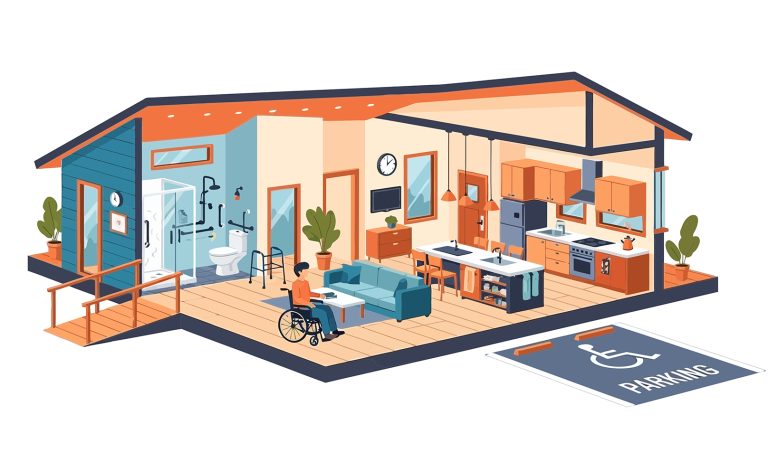
- Home modifications (officially “Environmental Accessibility Adaptations”). Physical changes to your home to keep you safe and independent — ramps, grab bars, widened doorways for a wheelchair, stair lifts, and wheelchair-accessible bathrooms.
- Medically tailored meals and healthy groceries. Deliveries of nutritious, prepared meals and healthy groceries to support a specific health condition, sometimes with food vouchers or nutrition education.
- Housing deposits. Help with the one-time costs of getting into a home — security deposits, utility set-up fees, and first and last month’s rent. Some plans can also cover medically necessary move-in items like an air conditioner, heater, or hospital bed.
- Asthma remediation. Home changes that reduce asthma triggers — air filters, dehumidifiers, specialized vacuums, and better ventilation to cut down on mold and dust.
- Personal care and homemaker services. In-home help with daily activities like bathing, meal preparation, grocery shopping, and getting to medical appointments. (More on how this fits with IHSS below.)
- Respite services. Short-term relief for caregivers — hourly, daily, or overnight care so a family caregiver can rest.
- Recuperative care and short-term post-hospitalization housing. A safe place to recover after a hospital stay for people who do not have stable housing.
The DHCS menu also includes services aimed at more specific situations, such as sobering centers, day habilitation programs, nursing facility transition and diversion, and housing navigation and tenancy services.
Home modifications
Ramps, grab bars, widened doorways, stair lifts, and wheelchair-accessible bathrooms to keep you safe and independent.
Medically tailored meals
Nutritious prepared meals and healthy groceries delivered to your door, sometimes with food vouchers or nutrition education.
Housing deposits
Help with security deposits, utility set-up fees, and first and last month's rent—plus some medically necessary move-in items.
Asthma remediation
Air filters, dehumidifiers, specialized vacuums, and better ventilation to reduce home triggers like mold and dust.
Personal care & homemaker
In-home help with bathing, meal prep, grocery shopping, and getting to appointments—which can supplement IHSS in some cases.
Caregiver respite
Short-term relief—hourly, daily, or overnight—so a family caregiver can rest and recharge.
How this connects to IHSS
If you already receive In-Home Supportive Services, it is fair to ask how Community Supports fit in. IHSS and Community Supports are separate programs, but the state designed them to work alongside each other.
The most direct overlap is Personal Care and Homemaker Services. According to DHCS, this Community Support can supplement IHSS in specific situations — for example, when someone needs more hours than their county IHSS assessment approved, during the waiting period after being referred to IHSS but before services begin, or for people who are not eligible for IHSS and are trying to avoid a short nursing-facility stay. It is not meant to replace IHSS, and it is not automatic; it is a possible supplement where a plan offers it and the member qualifies.
Caregiver respite is another one worth knowing about. It does not require an IHSS connection — any member who meets the program’s criteria may qualify — and for families providing round-the-clock care, even a few hours of covered relief can make a real difference.
How this works with IHSS
IHSS and Community Supports are separate programs, but they're built to work side by side. Community Supports do not replace your IHSS hours.
Personal Care & Homemaker Services may supplement IHSS—for example, when you need more hours than your county approved, during the wait after an IHSS referral but before services start, or if you aren't eligible for IHSS and are trying to avoid a short nursing-facility stay.
Caregiver respite does not require an IHSS connection. Any member who meets the criteria may qualify.
Who qualifies, and how to actually get these services
Community Supports are not an automatic entitlement. Even where a service is offered, you have to meet the specific eligibility criteria for that service and get your plan’s authorization. Being enrolled in Medi-Cal, by itself, does not guarantee you will receive any particular Community Support.
Access usually starts with a referral. A care coordinator, social worker, doctor, or the health plan itself can submit one on your behalf, and in many cases you can call your plan and refer yourself. From there, the plan and the service provider confirm your eligibility and, if approved, authorize the service.
4 steps to get started
Find your plan
Look on the back of your Medi-Cal card for your managed care plan's name and Member Services number.
Check what's offered
Use the DHCS Community Supports Search Tool for your county, or ask Member Services which supports your plan covers.
Ask for a referral
Tell your plan, doctor, or care coordinator which service interests you and why it would help your health.
Confirm eligibility
Each service has its own criteria. The plan decides whether you qualify and approves the service before it begins.
One benefit that’s now required: Transitional Rent
There is a single exception to the “everything is optional” rule. As of January 1, 2026, all Medi-Cal managed care plans are required to offer Transitional Rent — up to six months of rental assistance to help someone move out of homelessness and into stable housing.
This one is narrow, though. It is limited to people who are experiencing or at risk of homelessness and who meet additional clinical criteria — for example, qualifying for specialty mental health or substance use services, or living with one or more serious chronic physical health conditions or a physical, intellectual, or developmental disability, often following a major life transition such as leaving an institution or foster care. If that describes your situation, it is worth asking your plan about.
Transitional Rent
This is the one Community Support every Medi-Cal managed care plan must now offer: up to six months of rental assistance to help someone exit homelessness. Eligibility is narrow—members must be experiencing or at risk of homelessness and meet added clinical criteria (such as qualifying for specialty mental health or substance use services, or living with a serious chronic condition or disability), often after a major life transition. If that fits your situation, ask your plan.
Community Supports are one of the most valuable and least-advertised parts of Medi-Cal — and because they are mostly optional, they are easy to miss. If a ramp, home-delivered meals, help with a deposit, or extra in-home hours would make your life safer or more stable, the first move is the same: find out what your specific plan and county actually offer, then ask for a referral. These services will not come looking for you, but if they are available where you live, they are yours to ask for.