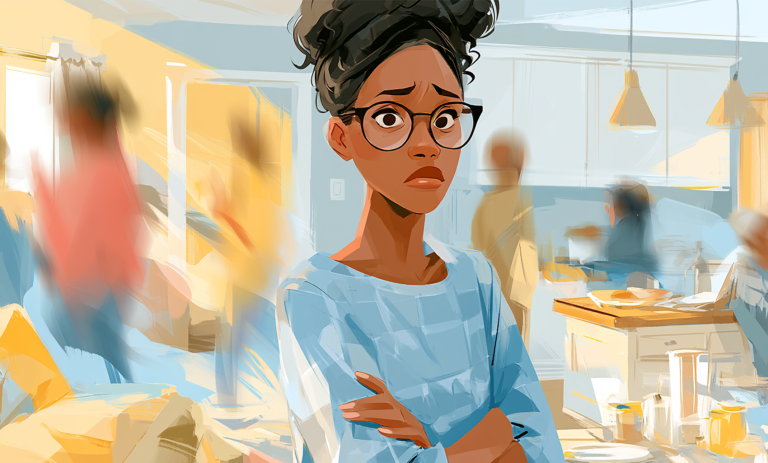
The people we care for become part of our lives. When an IHSS recipient passes away, the loss is real — and on top of grief, you may be facing sudden questions: Will I get my last paycheck? Does my job just end? What happens now? This guide walks you through what to do in the days after, what you’re still owed, and how to find your next client when you’re ready.
In the first days
Grieving is not a distraction from the practical steps — it’s the reason to take them gently. Give yourself permission to feel the loss. A recipient you saw every day, helped in and out of bed, cooked for, and talked with is not “just a client.” When you’re able, a few things need attention:
Notify the county IHSS office
Don’t assume the death has already been reported. Call your county office so the case closes correctly and payment problems are avoided.
Stop claiming hours as of the date of death
You can be paid for care given up to and including that day — never after. Claiming later hours, even by mistake, can be treated as fraud.
- Notify the county IHSS office. The family or the social worker usually reports the death, but don’t assume it’s been done. Call your county IHSS office and let them know. This closes the case correctly and prevents payment problems later.
- Stop claiming hours as of the date of death. This is the single most important rule. You can be paid for care you actually gave up to and including the day the recipient died — but not for any hours after. Claiming hours after the date of death, even by mistake, can be treated as fraud.
Your final timesheet and last paycheck
Your final timesheet, step by step
- ✓ Claim every hour you actually worked through the date of death.
- ✕ Do not claim any hours after the date of death.
- ✓ If your recipient died before signing, you can still be paid — call your county to learn how the final timesheet is verified (it varies by county).
- ✓ Submit as usual (ESP portal, phone, or paper). Payment is generally issued within about 10 business days of the timesheet reaching the processing center.
You earned your final wages, and you should be paid for them.
If your pay is late: If weeks pass and your final payment hasn’t arrived, call your county IHSS office or the IHSS Service Desk. Delays are almost always paperwork — not denial.
What ends — and what you may still be entitled to
When the recipient’s case closes, your authorization to work for that person ends with it. But a few things are worth checking before you move on.
Unemployment insurance
As a non-family provider you’re generally an employee for UI purposes, and losing your recipient is a qualifying reason to file. You must still meet EDD’s earnings requirements. List your employer as IHSS / the county, not the person you cared for.
Paid sick leave
Accrued sick leave is not cashed out when your case ends, and unused hours expire. If you have hours and a valid reason, use them before the case closes — otherwise they’re forfeited.
Your provider enrollment
Being an IHSS provider isn’t tied to one recipient. Your enrollment, background check, and provider number stay valid — no need to start over to work with someone new.
Good to know: Providers who cared for a spouse or their own minor child are often exempt from paying into unemployment, which can affect their eligibility. As a non-family provider, that exclusion usually does not apply to you.
Finding your next client
There’s no set timeline for grief, and only you know when you’re ready to care for someone again. When you are:
Get on your county’s Public Authority registry. Most counties match available providers with recipients looking to hire. Contact your local Public Authority to join or confirm you’re listed.
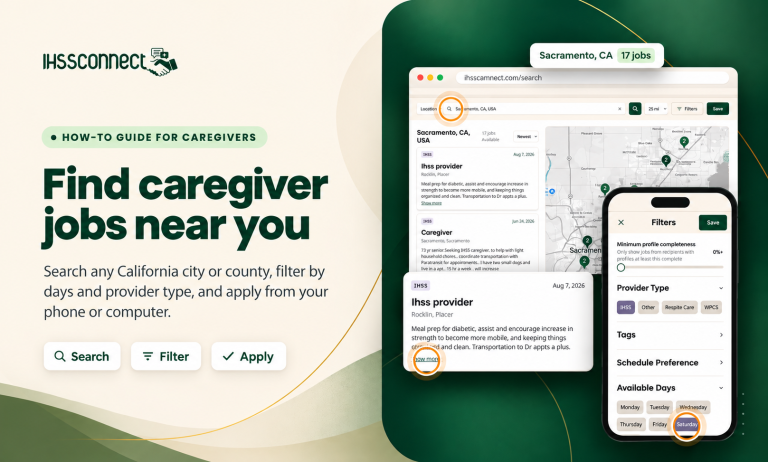
Update your IHSS Connect profile & let your network know you're available. Word of mouth — other caregivers, senior centers, disability community groups — is how many providers find their next role. Update your profile at www.ihssconnect.com
Keep your enrollment current. Update your contact info and any required paperwork so you don’t miss a match.
- Get on your county’s Public Authority provider registry. Most California counties keep a registry that matches available providers with recipients looking to hire. If you completed enrollment, you may already qualify to be listed — contact your local Public Authority to join or confirm you’re on it.
- Let your network know you’re available. Recipients often find providers by word of mouth — other caregivers, senior centers, and disability community groups are all good places to be known. Update profile on IHSS Connect.
- Keep your enrollment current. Make sure your contact information and any required paperwork are up to date so you don’t miss a match.
Caring for yourself
Caregiver grief is real, and sometimes complicated — you may feel loss, relief, guilt, and exhaustion all at once. None of that means you did anything wrong. If the weight stays heavy, talk to your doctor, a grief counselor, or a support group. Many hospices offer free bereavement support to anyone in the community, not only to family members. And if you’re ever in crisis, you can call or text 988 any time.
You gave someone comfort and dignity at a time when they needed it most. That matters — and it doesn’t end because the job did.
You don’t have to carry this alone
Caregiver grief can bring loss, relief, guilt, and exhaustion all at once — none of it means you did anything wrong. Talk to your doctor, a grief counselor, or a support group. Many hospices offer free bereavement support to anyone in the community, not only family.
Find your county IHSS office
Case-specific questions — your final timesheet, closing the case, your last paycheck — are handled by your county office, not the state. Pick your county to open its official IHSS page and find its phone number and hours.
Statewide help: For timesheet or payroll questions, the IHSS Service Desk is (866) 376-7066.
Full official directory: CDSS County IHSS Offices ↗