When Pope Leo XIV recently addressed families, caregivers, volunteers, and researchers supporting people living with ALS, he delivered something far more meaningful than a ceremonial Vatican speech. He offered a direct affirmation of caregiving itself — not as secondary work, but as one of the deepest expressions of human dignity, compassion, and solidarity.
For families across California caring for children with disabilities, aging parents, medically fragile loved ones, or individuals requiring daily supervision and support, his words landed with unusual emotional weight. In a society increasingly built around speed, productivity, and independence, Pope Leo spoke about something entirely different: presence.
“No-one should ever be left alone,” he said.
A Champion of Caregivers
That single sentence captures what millions of caregivers already understand. Care is not only about medication schedules, appointments, therapies, bathing, feeding, mobility, or paperwork. Care is about refusing to abandon someone when life becomes difficult. It is about showing up again and again — often quietly, often exhausted, and often without recognition.
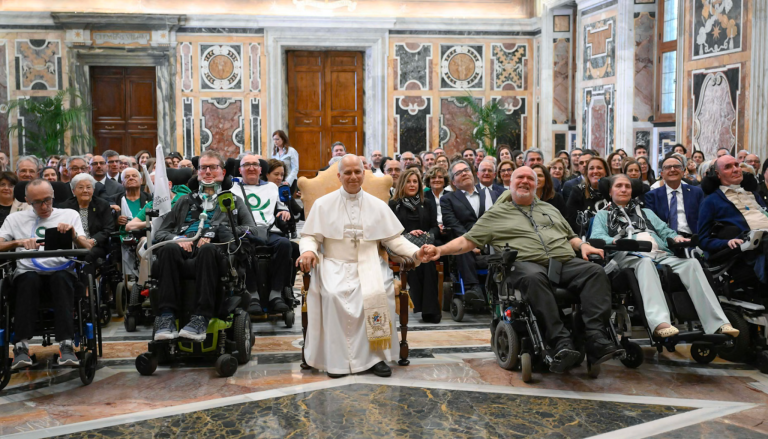
Speaking to members of the Italian ALS Association (AISLA), Pope Leo praised what he described as a “therapeutic alliance of deep closeness and solidarity.” His remarks focused heavily on home-based care, emphasizing that true healthcare requires more than technical expertise. It requires human presence.
“Healthcare, as well as organization and expertise, requires a presence — including a physical one — for the good of the person in all their dimensions: biological, psychological and spiritual,” he said.
That distinction matters. Around the world, and especially in home care systems, caregivers are often treated as logistical support rather than essential emotional and human anchors. Pope Leo challenged that idea directly. For him, “being close” is not separate from care. It is care.
The Pope specifically praised caregivers who remain physically present in the homes of those suffering. He spoke about accompanying people “where they are,” offering not only practical support but emotional and spiritual companionship as well. He noted that suffering often raises profound questions about meaning, fear, hope, and purpose — questions that “cannot go unheard.”
For many families providing in-home care through programs like IHSS in California, those words may feel deeply familiar. Caregiving often happens behind closed doors and outside public visibility. Parents monitor dangerous behaviors overnight. Spouses manage medications and mobility challenges. Adult children coordinate therapies, appointments, insurance, and emotional support for aging parents. Much of this labor is invisible to the outside world.
Pope Leo’s remarks acknowledged that invisible work directly.
Prophets Among Us
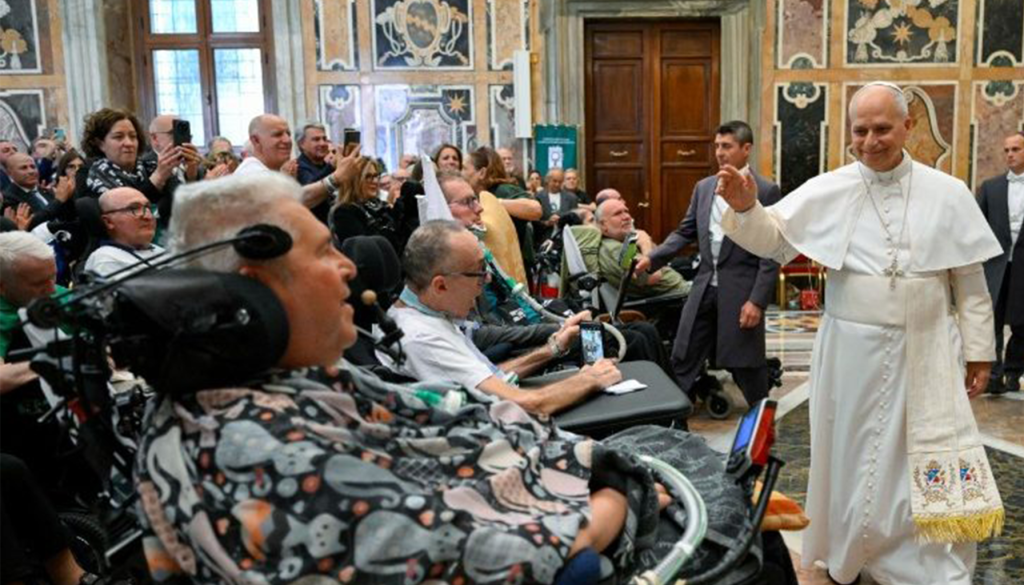
He also made a point that felt especially powerful in today’s climate of social isolation and institutional burnout. Voluntary service and caregiving, he said, actively resist what he called a “culture of waste and death.” In other words, caregiving pushes back against the idea that human worth is tied only to productivity, physical strength, or independence.
That message resonates strongly in disability communities, where families often battle systems that unintentionally reduce individuals to diagnoses, functional limitations, or costs. Pope Leo instead framed caregiving as an act that reaffirms the inherent value of every human life.
“The goodness and value of life are greater than illness,” he said.
Importantly, the Pope did not romanticize suffering. His speech openly acknowledged pain, exhaustion, and hardship. But he emphasized that suffering does not erase a person’s dignity or ability to give and receive love. In one of the most moving portions of his address, he praised people living with ALS themselves for teaching society “the true value of life.”
He called them “prophets.”
That perspective turns many traditional assumptions upside down. Rather than viewing disabled or medically fragile individuals only as recipients of care, Pope Leo described them as teachers capable of revealing humanity’s deepest truths about connection, vulnerability, and love.
For caregivers, his closing message was simple but deeply personal:
“Do not give up. Keep going with this courage and hope in the Lord.”
Whether one approaches those words through faith, spirituality, or simply through shared human experience, the emotional truth behind them is difficult to ignore. Caregiving can feel isolating. Many caregivers quietly experience burnout, financial strain, grief, interrupted careers, sleep deprivation, and overwhelming emotional pressure. Yet they continue showing up.
Pope Leo’s remarks served as a rare public acknowledgment that this work matters profoundly.
At a time when healthcare systems worldwide are struggling with staffing shortages, aging populations, and rising disability needs, his message also carried a broader cultural challenge: societies cannot function without caregivers, and caregivers themselves deserve recognition, support, dignity, and community.
Because in the end, caregiving is not only about helping someone survive.
It is about making sure they never feel abandoned while living.