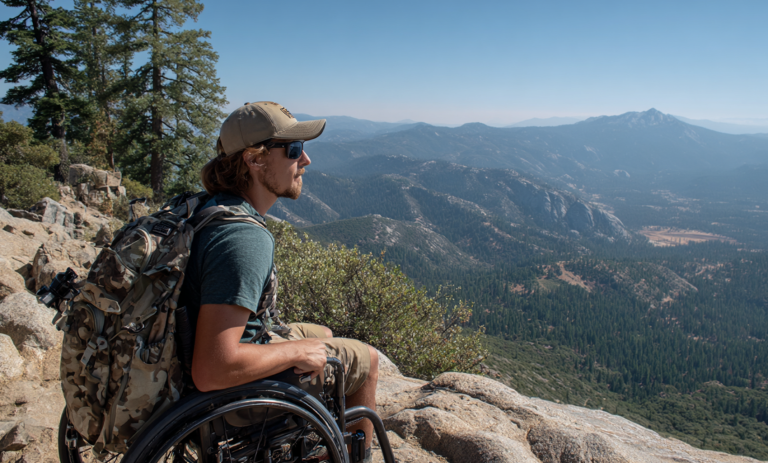
California is one of the most biodiverse and geographically stunning states in the country. It is also, increasingly, one of the most committed to making those landscapes reachable for everyone — including the estimated 1 in 4 Americans living with a disability.
But let’s be honest: outdoor adventure in a wheelchair is not seamless. The trail ratings on the sign often don’t account for loose gravel, sudden drops, or that final quarter-mile that turns to unpaved dirt. The beach looks accessible from the parking lot, then the sand swallows your wheels at the first step. The gondola loads fine — and then the mountain path at the top is cobblestone.
These are real hurdles. They require planning, the right information, and frankly, the kind of candor that most “accessible travel” listicles skip over.
This guide doesn’t skip over them. Every destination listed below has been vetted for documented, verified accessibility features — paved or firmly packed surfaces, beach wheelchairs (many loaned free), accessible restrooms, and specific programs designed with wheelchair users in mind. We will tell you what to expect, and where the limitations still exist.
U.S. citizens and permanent residents with permanent disabilities qualify for the America the Beautiful Access Pass — a free lifetime pass that waives entrance fees at all National Parks, National Forests, BLM lands, and more. Pick one up at any park entrance station or visitor center, or apply online at store.usgs.gov.
The Honest Reality of Rolling Outdoors
Before we get to the destinations, it’s worth naming what wheelchair users already know: the word “accessible” is used inconsistently across parks, beaches, and trail systems. A trail can be ADA-compliant at its trailhead and completely impassable 200 yards in. A beach can have a Mobi-mat that ends 50 feet from the water. A “paved path” can have a cross-slope that defeats a manual chair.
The destinations in this guide have been selected because they go beyond minimum compliance. They offer programs, equipment loans, or infrastructure that meaningfully expand where you can go — not just check a legal box.
A few universal truths to keep in mind: call ahead every time. Seasonal closures, construction, and weather all affect accessibility in ways that websites don’t always reflect. For beaches, confirm beach wheelchair availability — some operate first-come, first-served; others require advance reservation. For trails, ask specifically whether the accessible route is paved the entire way, and what the grade is. “Easy” and “accessible” are not synonyms in the outdoors.
Several trails and beach boardwalks are rated wheelchair-accessible but are steep enough to require assistance if you're self-propelling a manual chair.
Wider range of beach programs accommodate you, but steep trail sections may need a push. Check grade percentages, not just the "easy" label.
More independent range on inclines, but watch for soft sand, loose gravel, and cross-slopes that can tilt or bog down even powered chairs.
Beaches
California manages one of the most robust beach wheelchair loan programs in the country, coordinated through the California Coastal Commission and the Coastal Conservancy. Dozens of beaches across all coastal counties now offer free or low-cost beach wheelchair rentals — purpose-built chairs with wide, low-pressure wheels that roll over sand without sinking.
Mountains & Forests
California’s mountain parks are where accessibility infrastructure has advanced most dramatically in recent years — driven by National Park Service mandates and a genuine cultural shift in how parks think about inclusive design. Many of the most iconic views in the state are now reachable without leaving a paved surface.
National Park accessibility guides online are not always current. Trails may be closed seasonally, under construction, or temporarily impassable after storms.
Yosemite Accessibility Coordinator: (209) 379-1035
Sequoia / Kings Canyon: (559) 565-3341
Always call before visiting, especially between November and April.
Lakes
Lake country in California runs from the Eastern Sierra to the Northern Sierra — and several of these destinations have made real investments in accessible fishing piers, paved lakeside loops, and adaptive programs that go well beyond a parking placard.
Coastal Parks & Nature Trails
Not every great outdoor experience requires heading inland or into the surf. California’s coastal parks and bluff-top trails offer some of the most stunning accessible scenery in the state — ocean views, wildlife, old-growth boardwalks, and geological wonders, all on terrain that has been developed with access in mind.
Before You Roll Out — A Planning Checklist
No guide can replace a phone call. Conditions, equipment availability, and access points change seasonally. Here are the questions worth asking before every trip:
The California Coastal Commission maintains a county-by-county map of every beach in the state with a wheelchair loan program — updated annually.
Find it at: coastal.ca.gov/access/beach-wheelchairs.html
It's the most reliable first stop for any coastal trip planning in California, and it lists contact information so you can call ahead directly.
California Is Waiting For You
Adventure doesn’t require perfect terrain. It requires good information, honest expectations, and knowing that you’ve earned your place in every landscape this state has to offer — from the Pacific shore to the top of a Sierra gondola at 9,123 feet.
IHSS Connect helps connect caregivers and care recipients across all California counties. If you need support planning an accessible outdoor trip — from finding a caregiver companion to coordinating logistics — we’re here to help.