
When someone receiving In-Home Supportive Services (IHSS) is suddenly hospitalized, everything changes—fast. Care routines are disrupted, schedules collapse, and one of the most common questions providers and families ask is simple but critical:
“Can I still get paid?”
The answer isn’t always straightforward—and misunderstanding the rules can lead to denied timesheets, delayed payments, or even compliance issues. Here’s what actually happens, what to expect, and how to protect yourself from common (and costly) mistakes.
When IHSS Providers Can—and Cannot—Be Paid
The most important rule to understand is this:
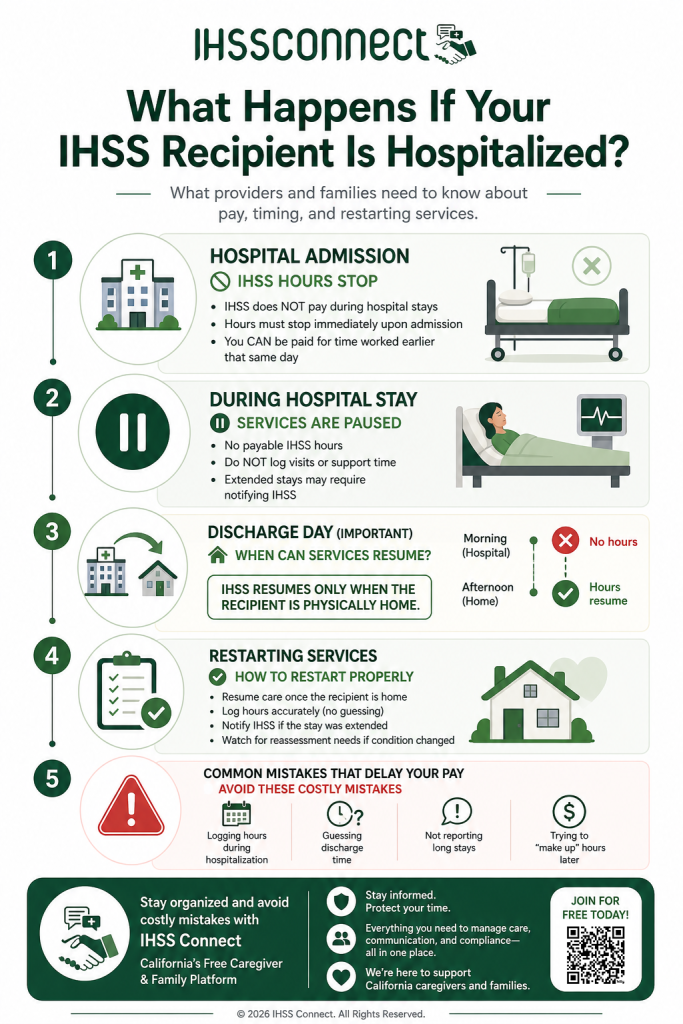
IHSS does not pay for services while the recipient is admitted to a hospital, skilled nursing facility, or other medical institution.
That means the moment a recipient is officially admitted, IHSS hours stop. It doesn’t matter if the provider is still visiting, helping emotionally, or coordinating care—those hours are not payable through IHSS.
However, there is nuance around timing:
- If you provided care before the hospital admission on the same day, those hours are still payable
- Once the recipient is formally admitted, IHSS time must stop immediately
- Providers cannot “estimate” or continue logging hours during hospitalization—even if discharge is expected soon
This is one of the most common areas where providers unintentionally submit invalid timesheets.
Understanding Discharge Timing (This Part Matters More Than You Think)
Discharge day is where things often get confusing.
IHSS services can resume the same day the recipient is discharged, but only under one condition:
👉 The recipient must be physically back home
Not “scheduled for discharge.” Not “on the way.” Not “cleared by the doctor. Physically back home.
Once the recipient returns home, providers can resume services immediately and log hours starting from that point forward.
This creates a gap that often looks like this:
- Morning: Recipient still in hospital → ❌ No IHSS hours
- Afternoon: Discharged and arrives home → ✅ IHSS can resume
Being precise about this timing protects both the provider and the recipient from rejected timesheets.
How to Restart IHSS Services Properly
In most cases, IHSS services automatically continue after a short hospital stay—but that doesn’t mean you should assume everything is seamless.
Here’s what you should do:
1. Notify the IHSS social worker (if the stay is more than a few days)
If hospitalization is extended, the county may temporarily pause or review services.
2. Resume services only after the recipient is home
Do not pre-fill timesheets or “bridge the gap.”
3. Double-check your timesheet entries
Make sure there are no hours logged during hospitalization dates.
4. Be prepared for reassessment if the condition changed
A hospital stay can sometimes lead to increased needs—or in some cases, decreased authorized hours.
The Mistakes That Delay (or Kill) Your Paycheck
These are the issues that come up over and over again—and they’re avoidable:
Logging hours during hospitalization
Even if you were helping, those hours are not payable under IHSS.
Guessing discharge times
If your timesheet shows hours before the recipient was physically home, it can get flagged or denied.
Not reporting extended hospital stays
Long stays can trigger eligibility or authorization reviews. Silence can create bigger problems later.
Trying to “make up” hours later
IHSS does not allow banking or shifting hours across days to compensate for lost time.
A Smarter Way to Stay Organized
Hospitalizations are stressful. The last thing families and providers need is confusion about hours, pay, or compliance.
This is exactly why more families are turning to platforms like IHSS Connect—to keep communication clear, maintain proper job structures, and avoid relying on scattered texts or social media groups during critical moments.
When everything is already organized—caregiver relationships, expectations, and communication—it’s much easier to navigate unexpected disruptions like a hospital stay.
The Bottom Line
Hospitalization pauses IHSS—but it doesn’t have to create chaos. If you remember just a few key rules, you’ll stay on track:
- No IHSS pay during hospital admission
- Services resume only when the recipient is home
- Timing matters—especially on admission and discharge days
- Accuracy on timesheets is everything
Handled correctly, this is a temporary pause—not a long-term problem.
Handled incorrectly, it can delay payments, trigger audits, or create unnecessary stress for everyone involved.
Need a new IHSS client?
If a hospitalization turns into a longer-term stay, it can leave providers unexpectedly without hours or income. Instead of scrambling or relying on word of mouth, a smarter move is to get ahead of it.
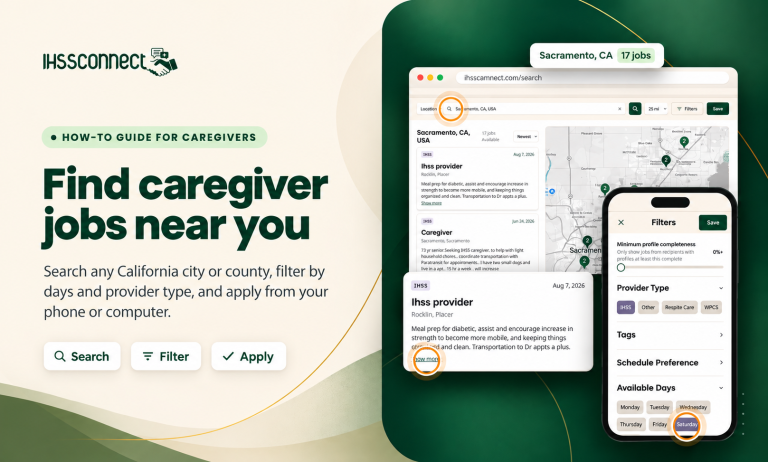
IHSS Connect makes it easy to find new IHSS clients across California—quickly, safely, and without the noise of social media groups. You can create a profile, connect directly with families actively looking for care, and keep your schedule full while continuing to support those who need it most.