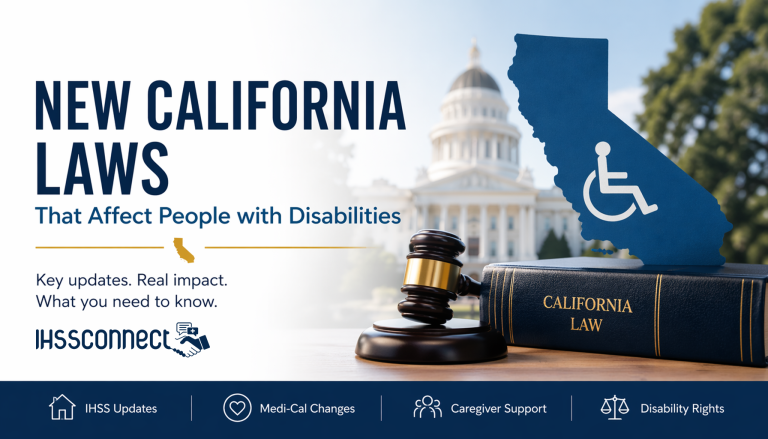
If you’re caring for someone with a disability—or living with one yourself—you already know how much policy shapes real life. It determines whether someone can stay safely at home, whether a caregiver shows up consistently, whether services are even accessible.
Over the past year, California has quietly rolled out a series of changes—some hopeful, some concerning—that are already impacting families across the state. And like most things in this space, the details matter.
Let’s walk through a few of the biggest ones.
IHSS Wages Are Rising — And That’s a Big Deal
One of the most meaningful changes happening right now is the steady increase in wages for In-Home Supportive Services (IHSS) providers.
Across California, counties are pushing toward a higher pay floor, with many approaching $20/hour. In Los Angeles County, for example, wages rose to about $19.64/hour in 2026.
This might seem like a small adjustment, but for families, it can be everything.
Higher wages mean:
- More caregivers entering the workforce
- Less turnover
- More stability for recipients who rely on consistency
As one analysis noted, higher pay can “help attract and retain reliable in-home caregivers.”
And if you’ve ever had to replace a caregiver suddenly, you know exactly why that matters.
Medi-Cal Asset Limits Are Back — And It Could Affect Eligibility
In a move that’s getting less attention than it should, California is reinstating asset limits for certain Medi-Cal programs starting in 2026.
The new limits are:
- $130,000 for individuals
- $195,000 for couples
That’s a major shift, especially after the state had previously eliminated asset limits to expand access.
For families, this means planning matters again. Savings, inheritances, or even modest financial cushions could impact eligibility for Medi-Cal—and by extension, IHSS.
It’s one of those policy changes that doesn’t feel real until it suddenly is.
Parents of Minor Children Just Got More Flexibility

One of the most impactful changes for families with younger children came through Assembly Bill 120.
Previously, there were strict rules about when a parent could be paid as an IHSS provider for their own child. Those restrictions have now been removed in many cases.
As summarized in guidance on the change, the law “eliminated provider eligibility requirements for minor recipients of IHSS.”
In simple terms: That’s huge. It recognizes something families have always known:
parents are often the most qualified caregivers for their own children. And now, more of them can be compensated for that care.
The State Budget Is Reshaping Services (For Better and Worse)
California’s 2025–2026 budget brought a mix of protections and pressure.
On the positive side:
- The state rejected a proposal to cap IHSS provider hours at 50 per week
- It preserved a 6-month grace period for people who temporarily lose Medi-Cal
Those decisions matter. Without them, many families would have lost care overnight.
But there are also concerns:
- Proposed cuts to programs like the Self-Determination Program (SDP)
- Discussions about eliminating the IHSS Backup Provider System in future budgets
That last one is particularly troubling. The backup system exists for one reason: when your caregiver doesn’t show up, you still need care. Removing it creates risk where families can least afford it.
A New “Master Plan” Could Change the Entire System
California is also rolling out a long-term transformation through its Master Plan for Developmental Services—a roadmap with over 160 action items.
At its core, the plan aims to:
- Make services more consistent across counties
- Improve access and transparency
- Strengthen the caregiving workforce
- Focus on long-term outcomes for individuals
It’s designed to fix something families have complained about for years: inconsistency.
Where you live in California shouldn’t determine the quality of services you receive—but historically, it has. This plan is an attempt to change that.
IHSS Rules and Structure Are Still Evolving
Even beyond major legislation, smaller regulatory changes continue to shape daily life.
For example:
- Providers are still generally capped at 66 hours per week across multiple recipients
- Funding for IHSS continues to grow, with billions allocated annually due to increasing demand
And behind the scenes, there’s a steady push toward:
- More digital applications
- Telehealth-based assessments
- More frequent reassessments of need
These aren’t flashy changes—but they affect how quickly people get approved, how services are delivered, and how often benefits are reviewed.
These laws aren’t just policy—they directly shape everyday life for individuals with disabilities and their families. They determine whether someone can safely remain in their home, whether a parent can afford to care for their child, and whether reliable help is available when it’s needed most. Programs like Medi-Cal and In-Home Supportive Services are essential lifelines, with millions relying on them for health coverage and daily care. Even small policy changes can have very real consequences, affecting stability, access, and quality of life.
For families trying to navigate these changes, there are trusted resources available, including the California Department of Social Services, Disability Rights California, the California Department of Developmental Services, and Undivided. These organizations can help clarify rights, explain benefits, and provide guidance during uncertain times.
If all of this feels overwhelming, that’s completely understandable. California’s disability support system is constantly evolving—sometimes improving access, other times creating new hurdles. But staying informed, even at a basic level, can make a meaningful difference. It helps families avoid costly missteps, advocate more effectively, and ultimately secure the care and support their loved ones need. In a system this complex, knowledge isn’t just helpful—it’s powerful.