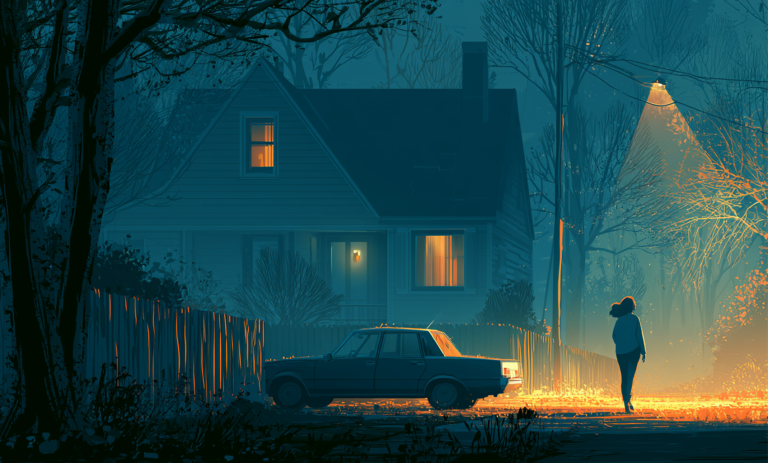
Many IHSS providers start or end their shifts in the dark. A morning caregiver may leave home before sunrise; an evening provider may not head out until long after the sun has gone down. Whether you are walking to a bus stop in Los Angeles, waiting for a ride in a quiet Central Valley town, or driving a two-lane road through the Sierra foothills, the trip home matters as much as the care you just provided.
This guide gathers practical safety tips for leaving a client’s home after dark, organized by how you travel and by the kind of place you live. Every tip is drawn from a public safety agency, transportation authority, or established safety organization, and the sources are listed at the end. These are general practices meant to lower risk, not guarantees. You know your route and your neighborhood best, so treat your own judgment as the final word.
Before You Leave the Home
Before You Leave the Home
- Plan the walk-out earlier in your shift. While it is still light, notice whether the porch, walkway, and driveway are well lit, and where your car or the bus stop is. A quick look during daylight tells you what changes once it gets dark.[11]
- Tell someone your plan. Let a family member, friend, or your scheduling contact know roughly when you are leaving, your route, and when you expect to arrive. If your plans change, send a quick update. [12][11]
- Get ready inside, not outside. Charge your phone, gather your keys, and have them in hand before you step out, so you are not searching through a bag in a dark parking lot.[10]
- Trust an uneasy feeling. If something about the surroundings does not feel right, wait, return inside, or call for help before heading out. Feeling safe is not something to talk yourself out of.[12]
Walking in the City After Dark
In denser California cities, the safest route is not always the shortest one.
- Stick to well-lit, busier streets, even if the walk is a little longer. Well-traveled, lighted paths lower your risk compared with shortcuts through dark or empty areas. [10]
- Stay visible and alert. Keep your phone for safety rather than distraction, and avoid wearing headphones in both ears so you can hear what is around you. [10]
- Know your safe havens. Keep a mental note of open businesses, lit storefronts, or busy corners along the way where you could step in if you needed to. [10]
- If you think you are being followed, do not head home. Walk quickly to a well-lit, populated place, then call a friend, a rideshare, or the police from there. [10]
- Consider a simple personal safety tool, such as a whistle or personal alarm, if it helps you feel more secure. [10]
Walking and Waiting in Rural or Low-Light Areas
Much of California is rural: farm roads in the Central Valley, foothill communities, high-desert towns, and long stretches of coast. These areas often have no sidewalks, few streetlights, longer distances, and patchy cell service.
- Make yourself visible to drivers. Carry a real flashlight or a headlamp and wear light-colored or reflective clothing. At night, pedestrians are very hard for drivers to see, so anything that reflects headlights buys the driver time to react. [1]
- Walk facing traffic where there is no sidewalk, staying as far off the roadway as you safely can. [1]
- Plan around spotty cell coverage. Because signal can drop out on rural roads, tell someone your route and expected arrival before you set off, and share your location if your phone allows it. [11]
- Watch for wildlife, which is most active around dawn and dusk, the same hours many shifts begin or end. [4]
At the Bus Stop and on Public Transit
- Cut down your wait. Check real-time schedules or a transit app and aim to reach the stop only a few minutes before your bus, so you spend less time waiting alone. [6] [7]
- Choose a well-lit, visible stop, ideally near businesses that are still open, and wait near other people rather than off by yourself. If a stop feels isolated or unlit, move to a busier one when you can. [7] [6]
- Stay alert while you wait. Stand in the light, keep at least one ear free of headphones, and keep an eye on who is around you. [6]
- On the bus, sit near the driver, stay awake, and keep your belongings close. [7] [6]
- Keep someone in the loop. Text a friend your route and let them know when you board and when you arrive. [6]
Taking a Rideshare or Taxi
- Wait inside. Stay in the home, a lobby, or a well-lit area until the app shows the car is a minute or two away, rather than standing at a dark curb with your phone out. [9] [8]
- Verify before you get in. Match the license plate, the car’s make and model, and the driver’s photo and name in the app. Ask the driver, “Who are you here to pick up?” and let them say your name, instead of offering it first. [8] [9]
- Ride in the back seat and share your trip status with a trusted contact so someone can follow your route in real time. [8] [9]
- Use the app’s safety tools, such as PIN verification and the in-app emergency button, which can connect you to 911 and share your location. [8]
Driving Home at Night
If you drive home, the two biggest night risks are fatigue and reduced visibility.
- Take fatigue seriously, especially after a long shift. Drowsiness slows your reactions and judgment much like alcohol does, and drowsy-driving crashes are most common between midnight and 6 a.m. If you feel sleepy, pull over somewhere safe to rest, get some caffeine, or stop for the night rather than pushing through. [2]
- Slow down and give yourself room. Death rates on the road are higher at night, so reduce your speed, increase your following distance, and keep your windshield and headlights clean. [1]
- Drive within your headlights. Keep your speed low enough that you could stop within the distance your headlights actually light up, and dim your dashboard so the road is easier to see. [1]
California terrain: wildlife on rural and mountain roads
- Deer and other animals are most active at dawn, at dusk, and during the fall mating season. Use your high beams when there is no oncoming traffic so you are more likely to catch the reflection of an animal’s eyes, and remember that deer travel in groups, so where there is one, expect more. [4] [5]
- If an animal is in your path, brake firmly, stay in your lane, and do not swerve. Most serious injuries come from drivers swerving and losing control or hitting something else, not from the animal itself. [4] [5]
California terrain: tule fog in the Central Valley
From fall through early spring, the Central Valley is often blanketed by thick ground fog known as tule fog, and most fog-related crashes happen because drivers are going too fast for the conditions. [3]
- Reduce your speed so you have a safe stopping distance. [3]
- Use low beams only. Never use high beams in fog, and never drive on parking lights alone. [3]
- Improve what you can see and hear. Turn on your wipers and defroster, and lower a window to listen for traffic you cannot see. [3]
- Be patient. Do not try to pass long lines of traffic, and watch for the reflective 3-2-1 dot markers on the right shoulder that count down to an upcoming exit. [3]
When Something Feels Wrong
Your safety comes before your schedule. If a situation feels unsafe, move to a well-lit, public place and call your supervisor or agency, or 911 in an emergency. It is always reasonable to step away from a situation you are not comfortable with rather than pushing through it. [12] [11]
Sources
- [1] National Safety Council — Driving at Night
- [2] NHTSA — Drowsy Driving
- [3] Caltrans — Safe Driving Tips for Foggy Conditions
- [4] Humane World for Animals — Avoid Hitting Deer and Other Animals
- [5] GEICO — Deer Collision Prevention
- [6] UCLA Transportation — Riding Transit Alone at Night
- [7] PennDOT — Public Transportation Safety Tips
- [8] Uber — Safety Tips for Riders
- [9] AAA — Ride-Hailing Safety Tips
- [10] Safer America — Walking Alone at Night
- [11] Comfort Keepers (Riverside, CA) — Nighttime Safety for Home Care
- [12] Monster — Safety Tips for Home Health Workers