You Loved the Home Modifications Piece — Here’s What Else Your Regional Center Already Owes You
Free respite hours, assistive technology, vehicle modifications, and incontinence supplies — four benefits regional center consumers can request through the same plan that covered your home mods. First, the part most articles bury: who this actually applies to.
Read this first — who qualifies
Everything in this article applies only to regional center consumers — people found eligible under California’s Lanterman Act because of a developmental disability. That is a different program from IHSS. Many people who receive IHSS are not regional center consumers, and these specific benefits do not reach them through the regional center.
Regional center and IHSS are two different doors
Regional Center
Serves people with a developmental disability that began before age 18. Provides the four benefits in this article through your Individual Program Plan (IPP).
IHSS
Pays a caregiver for daily support like bathing, meals, and housekeeping. A separate program — you can have both, but IHSS does not provide these regional center benefits.
It is common to have both, but they are not the same program. IHSS is a Medi-Cal program, run through your county, that pays a caregiver for daily support like bathing, meals, and housekeeping. The regional center system is run under the Lanterman Developmental Disabilities Services Act and serves people with developmental disabilities specifically.
To be a regional center consumer, a person generally must have a disability that began before age 18, is expected to continue indefinitely, and causes substantial disability. The law covers intellectual disability, cerebral palsy, epilepsy, and autism, along with conditions closely related to intellectual disability or requiring similar services. It does not cover conditions that are solely psychiatric, solely a learning disability, or solely physical in nature.
If you are not sure whether you or your family member is a regional center consumer, that is the first thing to confirm — not the benefits below. You can contact your local regional center to ask about eligibility. There are 21 regional centers across California, and the Department of Developmental Services keeps the full list.
One rule shapes all four benefits: “payer of last resort”
The one rule behind every request
The regional center is the payer of last resort. It funds a service only after other sources that could reasonably cover it have been tried. Those “generic resources” include:
- Medi-Cal
- Private health insurance
- California Children’s Services (CCS)
- Your school district
- IHSS and the Department of Rehabilitation
Before we get to the good part, the honest caveat. By law, the regional center is the payer of last resort. It pays for a service only after you have used up other sources that could reasonably cover it — what the system calls “generic resources.” Those include Medi-Cal, private health insurance, California Children’s Services, your school district, IHSS, and the Department of Rehabilitation.
In plain terms: the regional center rarely “owes” you a specific item automatically. What it owes you is a fair process. If a need is in your plan and no other program will cover it, the regional center is the backstop that steps in. Knowing this up front is what keeps a request from stalling — you can bring proof that other sources said no, which is often exactly what the regional center asks for.
Respite hours
A planned break for the caregiver while a trained worker provides safe care.
Assistive technology
Devices to communicate, move, or live more independently — bought, set up, and maintained.
Vehicle modifications
Wheelchair access or adapted controls, backed by a therapist assessment.
Incontinence supplies
Usually Medi-Cal first; the regional center can fund the gap it leaves.
1. Respite hours
Respite gives the family or primary caregiver a planned break while a trained worker provides safe care and supervision. It can happen in your own home or, in some cases, in a licensed facility, on a planned or emergency basis. The stated goals in the law are to help keep the person at home, provide safe care in the caregiver’s absence, and relieve the constant demands of caregiving.
How many hours? It depends on need, not a fixed ceiling. The rigid statutory hour caps that once applied were removed, and regional centers now set respite hours through the individual planning process based on your family’s actual situation.
⚠ “Free” is not universal
Respite is free for most consumers, but not everyone. Under the Family Cost Participation Program, parents of a child aged 3 to 17 living at home may pay a sliding share for respite, day care, and camp — but only if the child is not eligible for Medi-Cal and the family’s income is at or above four times the federal poverty level. Adults, Medi-Cal-eligible children, and lower-income families pay nothing.
A useful detail: you don’t always have to accept an agency worker you’ve never met. Families can often choose someone they know and trust — sometimes even a relative — to be the respite worker, as long as that person meets the regional center’s requirements and is approved.
2. Assistive technology
Assistive technology is any device or equipment that helps a person communicate, move, learn, or live more independently — from a speech-generating communication device to specialized software or adapted equipment. This is one of the strongest benefits to know about, because of what happens once it is approved.
Once assistive technology is written into your Individual Program Plan, the regional center is responsible for more than the purchase. It must pay for the item, obtain it, train you to use it, and maintain it. The catch is the same rule as always: the regional center will first ask you to try generic resources — Medi-Cal, California Children’s Services, your school district, or private insurance — before it funds the device itself.
3. Vehicle modifications
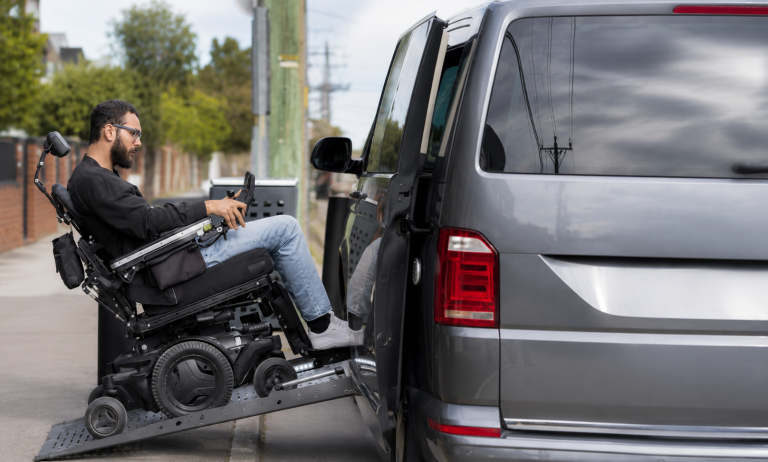
For a person who uses a wheelchair or needs adapted controls, a modified vehicle can be the difference between getting to medical appointments and day programs or not. The regional center can fund vehicle modifications, but this one has specific requirements that are worth getting right the first time.
Typically, the modification must be recommended by a physical or occupational therapist through a vehicle modification assessment, written into your Individual Program Plan, and installed by an authorized dealer or qualified installer. As with everything else, other funding sources — for example, the Department of Rehabilitation when the modification is tied to work — may need to be explored first.
How to strengthen this request
Ask your service coordinator to arrange the therapist assessment before the planning meeting, so the recommendation is already in hand. A written clinical assessment tied to a specific need is the single most persuasive thing you can bring.
4. Incontinence supplies
This is the one most families get wrong — not because the benefit isn’t real, but because the regional center is usually not the first place to ask. For most people, Medi-Cal is the primary payer for incontinence supplies, and it covers a monthly amount when there is a qualifying medical need. For children, Medi-Cal can cover supplies through its EPSDT benefit when incontinence is tied to a chronic condition and the child is past the age continence is normally expected.
Where does the regional center come in? As the backstop. If Medi-Cal or private insurance covers only part of what you need, or denies a specific product your doctor recommends, the regional center can fund the gap. So the realistic path is: go through Medi-Cal first, and bring any denial or shortfall to your regional center rather than starting there.
How to actually ask for any of these
All four benefits run through the same door: your Individual Program Plan, or IPP. The IPP is the written plan the regional center creates with you, listing your needs, goals, and the services to meet them. A service that isn’t in your IPP generally won’t get funded, so the plan meeting is where this happens.
Put it in writing
Ask your service coordinator, in writing, to add the specific service to your IPP and to schedule a planning meeting.
Bring documentation
A doctor’s letter, a therapist’s assessment, or a denial letter from Medi-Cal or insurance all help show the need.
Be specific about need
Tie the request to safety, health, or the ability to stay at home — the goals the law itself names.
Get the decision in writing
Ask for the outcome in writing, whether it’s a yes or a no.
If they say no
A denial is not the end. If the regional center turns down a request you believe you need, you have the right to appeal. You will receive a written notice of the decision, and you can file an appeal to have it reviewed. Disability Rights California publishes free, detailed guides on the Lanterman Act and the appeals process, and can be a resource if you get stuck.
Make the plan
If you are a regional center consumer, respite, assistive technology, vehicle modifications, and help with incontinence supplies are all on the table — but each comes with the same two conditions: it has to be in your plan, and other funding sources usually have to be tried first. None of that means the door is closed. It means the request is a process you can prepare for, document, and, if needed, appeal. Start with the IPP meeting, bring your paperwork, and ask plainly for what you need.
This article is general information for the California disability community and is not legal advice. Program rules and funding can change — confirm current details with your regional center or Disability Rights California.