
FAMILY GUIDE • REGIONAL CENTER SERVICES
Respite Through Regional Center
How many hours you’re entitled to — and how to actually use them
Almost every guide to regional center respite opens with a number. This one won’t — because the honest answer is that California sets no fixed number of respite hours you’re entitled to, and anyone who tells you otherwise is repeating a rule that was repealed years ago. What you’re entitled to is respite sufficient to meet a documented need, decided through your IPP. That distinction is the whole game, and understanding it is what separates families who get enough hours from families who get a number a coordinator pulled off a chart.
First, the myth: there is no “90 hours a quarter” limit anymore
For years, state law capped regional center respite at 90 hours of in-home respite per quarter and 21 days of out-of-home respite per year, unless a family was granted an exemption. You will still find this figure repeated on university pages, blog posts, and even some current handouts. It is out of date.
Effective January 1, 2018, those caps were repealed. The Department of Developmental Services directed all regional centers that they are no longer limited to those amounts, and that families and service coordinators are to determine respite based on the individual’s needs. If a coordinator cites the old quarterly cap as the reason you can’t get more hours, they are citing a limit that no longer exists in law.
Source: California Department of Developmental Services, Program Directive on the repeal of the respite restrictions under Welfare & Institutions Code §4686.5. See the DDS directive (PDF).
So what are you entitled to? Respite that meets the need
Under the Lanterman Act, regional centers fund in-home respite to give family caregivers relief from the ongoing care and supervision of a person with a developmental disability who needs more care than a same-age person without a disability. The amount is not a flat allowance; it is tied to the level of care and supervision the person requires and to your family’s circumstances.
What legally drives the number of hours:
- The nature and severity of the person’s disability, behaviors, and medical needs.
- Your family circumstances — a single-parent household, the health of the caregivers, other children who also need care, work demands.
- Whether the need is to keep the person living at home rather than in a more restrictive setting.
This is why two families with children who share the same diagnosis can be approved for very different hours. The diagnosis isn’t the driver; the documented care and supervision burden is. Source: Disability Rights California, Rights Under the Lanterman Act, and the DDS Support Services overview.
The guideline trap: what a “standard amount” can and can’t do
Most regional centers use internal Purchase of Service (POS) guidelines — often a scoring tool or a typical hour range — to estimate respite. These guidelines are legal to use as a starting point. What they cannot do is decide your actual amount. Disability Rights California puts it plainly: the guidelines show how much respite people usually get, but they cannot be used to decide how much you get, because the Lanterman Act requires services to be tailored to each individual — and the guidelines must include exceptions.
Use this in the meeting
You can ask your regional center for a written copy of its respite POS guidelines including the exception criteria. Many publish them online. Knowing the exception language before the meeting lets you ask for an exception in the center’s own terms instead of arguing against a chart.
A second, legally required detail most families don’t know: a “decision maker” — someone from the regional center with the authority to actually approve your request — must attend the IPP meeting. If your request is unusual or larger than the guideline, tell your service coordinator ahead of time so the right person is in the room and can say yes without a second round.
The IHSS confusion that costs families hours
Regional centers are the payer of last resort, so they are required to consider “generic resources” — including In-Home Supportive Services (IHSS) — before spending regional center funds. This is legitimate. But it is routinely misapplied, and the misapplication quietly costs families respite hours.
Know this before anyone tells you IHSS replaces your respite
IHSS and respite are different services with different purposes. IHSS pays someone for personal care — bathing, feeding, protective supervision. Respite gives the family caregiver a break. Per Disability Rights California, IHSS or nursing hours can only be counted as meeting your respite need if they fully meet that need. Your respite may not be reduced simply because you also receive IHSS or nursing hours.
Two practical consequences. First, if you’re the IHSS provider for your own family member, those IHSS hours are you working — they are not a break for you, so they generally don’t satisfy the respite need at all. Second, a regional center can fund respite in the gap while an IHSS application is pending, and many centers explicitly do. Sources: Disability Rights California Respite Hearing Packet; RULA §6.31.
How to actually use respite once it’s approved
Approval is half the battle; the other half is that authorized hours go unused because families don’t know how delivery works or can’t find a worker in time. California offers three ways to receive in-home respite. You can usually choose, and the choice determines who you’re allowed to use as a worker.
| Model | How it works | Who can be the worker |
|---|---|---|
| Agency respite | A regional-center-vendored agency sends a worker to your home. The center pays the agency directly. Lowest effort for you. | A worker the agency assigns. You can request someone who speaks your language. |
| Employer of Record (EOR) | You already have a trusted person. They become an employee of an EOR respite agency that hires, pays, and handles compliance for them. | Someone you choose, 18+, CPR-certified, who lives outside your home. |
| Participant-Directed (PDS) | You direct the service yourself, with the most control over who you hire and how. Available through the Self-Determination Program and certain options. | Someone you choose and direct, subject to program rules. |
Source: California DDS, In-Home Respite Services family fact sheet (PDF).
Don’t lose hours you fought for
- Ask whether unused hours can be banked. Some centers let unused authorized respite roll over monthly within the fiscal year; others use it or lose it. Confirm your center’s rule in writing so you don’t forfeit hours.
- Line up the worker before you need the break, not during a crisis. The most common reason approved respite goes unused is that families can’t find an available, qualified provider in time — which is exactly the gap a county-by-county provider search is meant to close.
- Track your balance. If your center offers electronic visit verification (EVV) balance alerts by text or email, opt in so you always know how many hours remain.
If you’re denied or cut: the deadlines that decide everything
Respite is one of the most commonly denied or reduced regional center services, so know your appeal rights before you need them. Two deadlines matter, and confusing them is costly:
The two clocks — do not mix them up
30 days — to keep services flowing during your appeal. If the center is reducing or ending respite you already receive and you appeal within 30 days of your Notice of Action, your current hours continue while the appeal is decided. This is called “aid paid pending.”
60 days — the absolute deadline to file an appeal at all. Miss it and you lose the right to a hearing on that Notice of Action. A November 2025 administrative decision confirmed this 60-day deadline is strict, with no good-cause exceptions written into the law.
Note one asymmetry: if you are requesting a new or increased amount of respite and are denied, there is generally no “aid paid pending” to maintain — because there’s no existing service to continue. The 60-day filing deadline still applies. You request the hearing using the Lanterman Act Appeal Request Form, by mail, fax, email, or online through DDS; you don’t have to write legal arguments, only that you requested respite and were denied.
Sources: DDS Lanterman Act Appeals Information Packet; Disability Rights California Regional Center Hearing Packet.
What’s coming: a statewide respite tool
Because hours have varied so much from one regional center to the next, a 2023 law (Senate Bill 138) directed DDS to create a Standardized In-Home Respite Tool to make respite decisions more consistent statewide. As of the most recent DDS update in February 2026, the tool is still in development — DDS is collecting data from all 21 regional centers and testing the draft tool with families without yet using it to set hours. In other words, it is not in force today, but it is coming, and it may change how your hours are calculated. Watch your regional center’s notices.
Source: California DDS, Standardized In-Home Respite Tool Update (February 24, 2026).
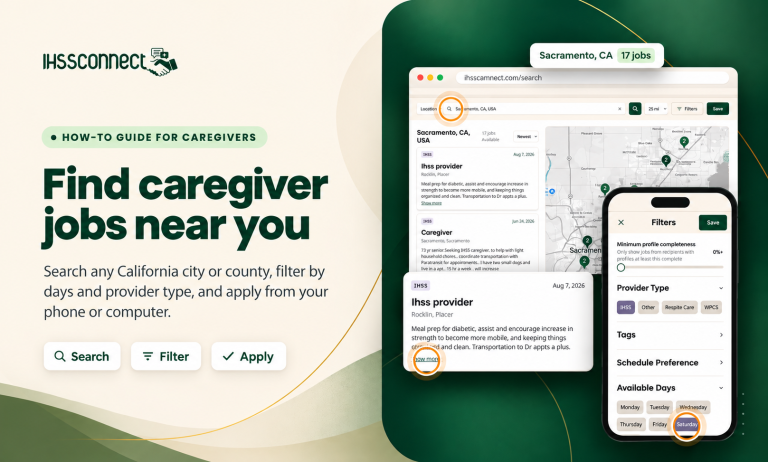
The bottom line is you aren’t entitled to a number — you’re entitled to respite that meets a documented need, with no statutory hour cap since 2018. The families who get enough hours treat the POS guideline as a floor to argue up from, not a ceiling; refuse to let IHSS be used to erase a respite need it doesn’t actually meet; pick the delivery model that lets them use a worker they trust; and never miss the 30- and 60-day appeal clocks. Approval is only half of it. Hours you can’t staff are hours you lose — so the moment respite is approved, find your provider on IHSS Connect.
This article is general information, not legal advice, and reflects sources current as of May 2026. Lanterman Act rules, regional center POS guidelines, and the forthcoming standardized respite tool change over time and vary by center. Confirm current rules with the California Department of Developmental Services and your regional center, and contact your local Clients’ Rights Advocate or Disability Rights California for help with a specific denial.