
When families hear that an IHSS social worker will be coming to the home, the reaction is often immediate anxiety. Even parents who have been through the process before can feel unsettled by it. The idea that someone is coming to observe your home, ask personal questions, and make decisions that may affect your child’s care can feel incredibly vulnerable.
Many parents describe the same experience. They start cleaning areas of the house no one will likely see. They worry about whether the kitchen looks too messy or whether the laundry piled in the hallway somehow says something about them as a parent. They wonder if the social worker will understand what daily life actually looks like, or if one short visit will reduce years of caregiving into a few quick observations.
This is especially true for families seeking or maintaining Protective Supervision. When your child’s safety depends on constant monitoring, the fear of being misunderstood can be overwhelming. Parents often feel like they are being asked to prove something they live every single day.
The truth is that an IHSS home visit should not be about judgment. It is meant to help the county understand the level of care your family is providing and the support your loved one requires to remain safe at home. Preparing for the visit is important, but preparation should focus on clarity, consistency, and honesty—not performance.
Understanding What the Social Worker Is Looking For
The purpose of the visit is not to determine whether your home is perfect. The social worker is there to assess functional need.
They are trying to understand how the recipient lives day to day. They want to know what tasks require assistance, what risks exist inside the home, how often supervision is necessary, and what would happen if that supervision were not present.
For a child with developmental disabilities, that may mean explaining wandering, unsafe behaviors, poor judgment, impulsivity, or the inability to recognize danger. For an elderly parent, it may involve medication management, mobility support, fall risks, or cognitive decline. For an adult with physical impairments, it may center around transfers, bathing, dressing, meal preparation, and safety monitoring.
The visit is intended to connect the paperwork to real life. It gives the county an opportunity to see how care functions in practice, not just on forms.
That means the most helpful thing you can offer is an accurate picture of your daily reality.
Your Home Does Not Need to Look Perfect
Many families make the mistake of believing the visit is partly a test of housekeeping. It is understandable—when someone is entering your private space, it is natural to want things to look their best.
But IHSS is not evaluating your interior design.
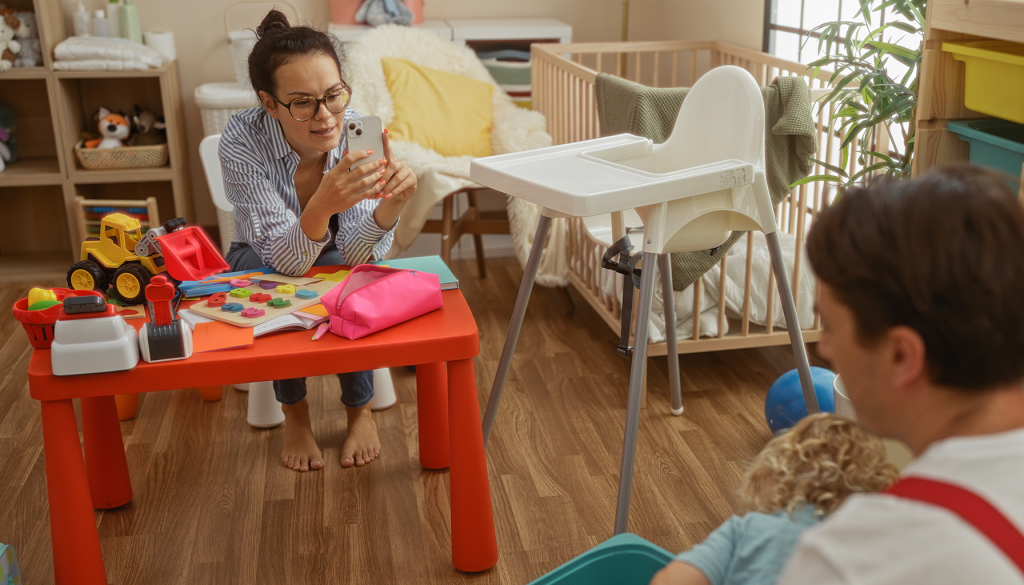
A safe and functional home is what matters. A lived-in home is normal. Dishes in the sink, toys on the floor, therapy equipment in the living room, feeding supplies on the counter, alarms on the doors, and medication charts taped to the refrigerator often tell a more honest story than a spotless kitchen ever could.
In fact, some of the things parents feel embarrassed by are often important indicators of care needs. Safety locks placed high on doors may show elopement risk. Extra gates or alarms may demonstrate constant supervision needs. A bedroom adapted with medical equipment may explain mobility challenges more clearly than words alone.
Families should not feel pressure to hide the realities of caregiving. The goal is not to present a polished version of life. It is to show the truth.
Documentation Should Support Your Case, Not Just Add Paper
One of the most important parts of preparing for an IHSS home visit is having the right documents ready and organized.
This does not mean handing the county every paper you have ever received. In fact, that is often one of the biggest mistakes parents make. Families are understandably eager to prove their child’s needs, so they start printing everything—old reports, unrelated evaluations, outdated school notes, and documents they have not fully reviewed. More paper does not always mean a stronger case.
Documentation should help.
If a document supports what you are explaining about your child’s supervision needs, safety risks, behaviors, or inability to self-direct, it is worth having printed, organized, and ready to provide. If it does not help—or worse, if it contradicts your position—it should not be handed over casually.
Parents should review their IEP, IPP, psychological evaluations, behavior reports, and medical records carefully before the visit. These documents should reflect the same concerns you are describing to the county. If you are explaining that your child has no awareness of danger, frequent elopement, unsafe impulsivity, or requires constant redirection for safety, but the IEP describes the child as largely independent and safe with minimal supervision, that inconsistency will stand out immediately.
It will look strange to the county, and if the case ever moves to hearing, it will look even more concerning to an administrative law judge.
Consistency matters.
This does not mean changing records—it means making sure the professionals involved in your child’s care are accurately documenting reality. If school records or regional center documents are minimizing serious safety concerns, that should be addressed early, not discovered for the first time during an IHSS denial or appeal.
Having a clean folder of relevant, helpful, and consistent records creates confidence during the visit. It also shows that you understand your child’s case and are prepared to advocate clearly.
Writing Things Down Before the Visit Helps More Than People Realize
Parents often normalize extraordinary situations because they have lived them for so long. Behaviors that would alarm an outside observer start to feel routine. It becomes easy to forget how significant certain safety risks really are because they happen so often.
Keeping notes can help.
Write down recent incidents, supervision concerns, and the tasks that require intervention. If your child ran into the street, turned on the stove, climbed out a window, flooded the bathroom, left the house without warning, or needed constant redirection to stay safe, those details matter. If your elderly parent forgot medication, wandered outside at night, or required help getting to the bathroom multiple times overnight, that matters too.
These are not stories meant to dramatize the situation. They are evidence of what caregiving actually looks like.
Having these examples written down helps prevent important details from being forgotten during the stress of the visit. It also helps families explain patterns rather than relying on one emotional conversation.
Avoid the Urge to Minimize Difficulties
Many parents instinctively downplay what they are managing.
Some do it because they are proud and do not want to sound overwhelmed. Others do it because they spend so much time protecting their child’s dignity that they struggle to describe the harder parts honestly. Some simply do it because they are used to carrying the load and no longer recognize how heavy it really is.
But during an IHSS assessment, minimizing can create serious problems.
If a parent says, “We manage,” without explaining that managing requires constant supervision and sleep deprivation, the county may hear that no additional support is necessary. If a child appears verbal and friendly during the visit, but parents do not explain the dangerous impulsivity that happens every other day, the full picture gets lost.
This process requires honesty, even when that honesty feels uncomfortable.
Explaining that you cannot leave your child alone long enough to shower, or that you sleep lightly every night because of wandering risk, is not complaining. It is providing accurate information. The county cannot evaluate needs they do not fully understand.
One Good Day Does Not Define the Entire Case
Parents often worry that their child will “look too good” during the visit.
A child who usually struggles with transitions may be calm and cooperative that afternoon. A child with serious behavioral challenges may be unusually quiet around unfamiliar people. Some children mask well in short interactions, especially when routines are disrupted by visitors.
This can be frustrating because parents know the visit is not capturing normal life.
It is important to remember that the social worker is assessing overall need, not just one moment. Your explanation matters. Patterns matter. Documentation matters.
If your child happens to have a calm day, explain that clearly. If they have a difficult day, there is no need to apologize for it.
Neither situation should define the case more than the long-term reality does.
You Are Allowed to Ask Questions
Families sometimes feel like they must simply answer questions and hope for the best. In reality, the home visit should be a conversation.
You can ask what the worker is documenting. You can clarify information that feels misunderstood. You can explain why something matters if it seems overlooked. You can ask what the next steps will be and when to expect follow-up.
It is also wise to write down names, dates, and what was discussed. If there is ever confusion later, having your own record is helpful.
Advocacy does not have to be confrontational. Often, it is simply the willingness to participate fully instead of sitting quietly in fear.
Remember What This Process Is Really About
The emotional weight of an IHSS home visit often comes from the feeling that families must prove they deserve help.
That mindset can create shame where there should be none.
IHSS exists because care is work. Supervision is work. Preventing injury is work. Helping someone remain safely at home is work.
Families are not asking for a favor when they participate in this process. They are asking for appropriate recognition of real and necessary caregiving responsibilities.
The home visit is simply one part of that system.
It does not require perfection. It requires honesty.
If your home reflects the reality of raising a child with significant needs, caring for an aging parent, or supporting a loved one with disabilities, that is not something to hide. It is part of the story.
And often, it is the clearest proof of why support is needed in the first place.