Many families navigating California’s disability support system hear the terms IHSS and WPCS used together and assume they are the same thing. They are closely connected, but they are not the same program—and understanding the difference can make a major impact on the amount of care and support your family receives.
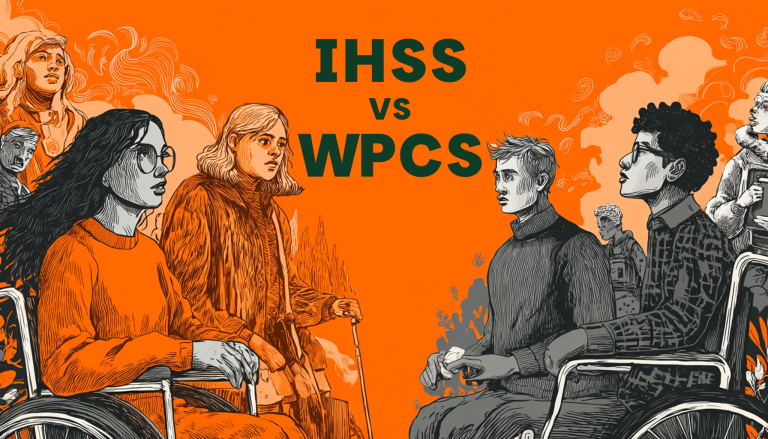
IHSS vs. WPCS
IHSS, or In-Home Supportive Services, is a California program that helps low-income seniors and individuals with disabilities remain safely in their homes instead of being placed in a facility. It covers supportive services like bathing, dressing, feeding, mobility assistance, meal preparation, paramedical services, protective supervision, and other daily living needs. IHSS is administered through county social services departments and funded through Medi-Cal.
WPCS, or Waiver Personal Care Services, is different. WPCS is part of the Home and Community-Based Alternatives Waiver (HCBA Waiver), which is designed for individuals with significant medical needs who qualify for a nursing facility level of care but want to remain safely at home. WPCS can provide additional caregiving hours beyond what IHSS allows, especially for families caring for medically fragile children or adults with intensive care needs.
This is where the two programs work together.
Separate But Powerful
IHSS and WPCS are separate programs, but they can exist side by side. A person may receive IHSS hours for daily support and also qualify for WPCS hours to cover medical or extended supervision needs that go beyond the IHSS cap. WPCS does not replace IHSS—it supplements it.
Think of IHSS as the foundation and WPCS as the extension.
For example, a child with significant disabilities may already receive IHSS Protective Supervision and personal care hours, but the family may still be providing around-the-clock support because of feeding tubes, seizures, respiratory care, or overnight medical monitoring. In these situations, WPCS may provide additional authorized hours so the family has more realistic support for the actual level of care happening inside the home.
One of the biggest misunderstandings is assuming approval for IHSS automatically means approval for WPCS. It does not. WPCS requires separate eligibility through the HCBA Waiver and often involves medical documentation showing the person would otherwise require institutional-level care. This process is usually coordinated through waiver agencies rather than directly through the county IHSS office.
Caregiver Confusion
Another common misunderstanding is about providers.
An IHSS provider is the person hired to perform approved IHSS tasks. This may be a parent, spouse (in limited cases), relative, or outside caregiver depending on the situation. Providers must complete enrollment, background checks, orientation, and timesheet requirements through the county.
A WPCS provider may sometimes be the same person serving as the IHSS provider, but WPCS authorization and timesheets are handled separately through the waiver structure. Families must understand that just because someone is approved for IHSS does not automatically mean they are set up correctly for WPCS.
Connected Care, Different Systems

The programs are connected—but the paperwork is not.
That separation matters because mistakes in enrollment, missed provider approvals, or confusion about which hours belong to which program can delay payment and create enormous stress for families already carrying heavy caregiving responsibilities.
This is especially important for parents of medically complex children. Many families spend months fighting for IHSS hours and never realize WPCS may also be available. Others hear about WPCS but are never properly guided through the HCBA Waiver process. Too often, support exists on paper but families are left to figure it out alone.
That should not happen.
The goal of both programs is the same: keeping people safe at home with dignity, independence, and the right level of care. IHSS helps with daily living and supervision. WPCS helps bridge the gap when medical complexity demands more than standard IHSS hours can provide.
Together, they can be life-changing.
Families looking to learn more about IHSS can start with the California Department of Social Services IHSS page here.
For WPCS and HCBA Waiver information, families can review the California Department of Health Care Services page here.
Families can also speak with their local Regional Center, waiver agency, or experienced advocacy professionals who understand how these programs work together.
Because the truth is simple: families should not have to discover life-changing services by accident.
Understanding the difference between IHSS and WPCS is often the first step toward finally getting the level of support your loved one truly needs.