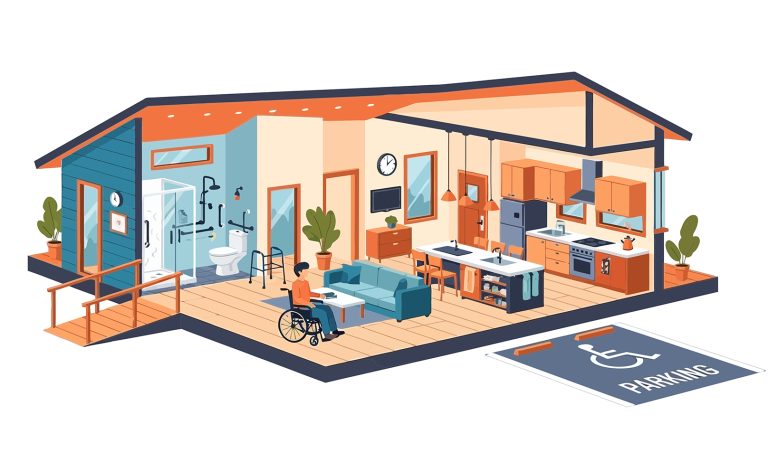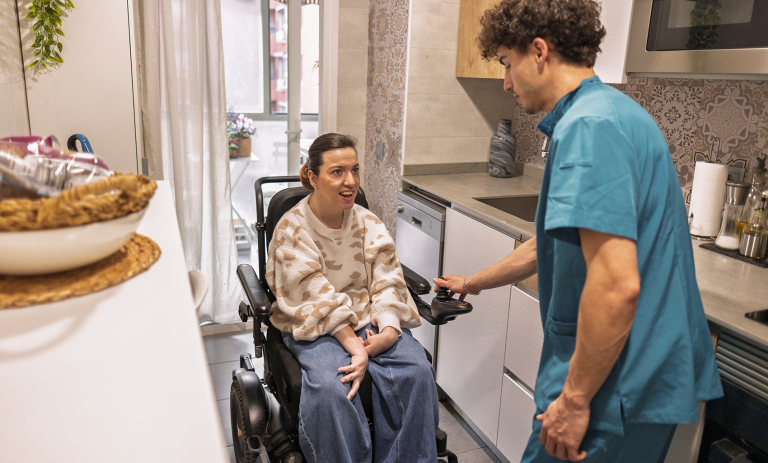

A plain-language guide to one of California’s least-understood entitlements — what Regional Centers actually do, why two families in different counties can get different answers, and how to make the system work for you.
Last verified: May 2026. All statistics, statutory citations, and quoted statements were verified against primary sources at the time of publication. To find your specific Regional Center’s contact information, see our Regional Center Directory.(Editor: link to the HTML directory page here.)
Quick Orientation
Regional Centers and IHSS (In-Home Supportive Services) are two different California programs. IHSS is run by counties and pays caregivers to help with daily activities like bathing and cooking. Regional Centers are 21 nonprofit agencies under contract with the California Department of Developmental Services (DDS) that coordinate services for people with developmental disabilities — autism, intellectual disability, cerebral palsy, epilepsy, and a fifth catch-all category. Many families work with both. This guide is about Regional Centers.
Why This Feels Like a Guessing Game
If you’ve sat across from a service coordinator and walked away unsure what you were actually entitled to, you’re not alone. There’s no menu. There’s no price list. And the answer to “what can my Regional Center pay for?” depends on three things at once: what state law requires, what your specific Regional Center has decided is reasonable, and what your child or family member actually needs.
This guide breaks that down. It uses the real legal terms you’ll hear during intake, points to official DDS sources, and explains the parts of the system that trip up most families.
A core thing to understand up front: Regional Center services are an entitlement under California law, not a benefit you apply for. The Lanterman Developmental Disabilities Services Act (California Welfare and Institutions Code §4500 and following) creates a legal right to services for people who qualify. That’s unusual in U.S. disability policy.
The Act opens with an explicit statement of state responsibility:
"The State of California accepts a responsibility for persons with developmental disabilities and an obligation to them which it must discharge."
— California Welfare and Institutions Code §4501
The California Supreme Court reinforced this in Association for Retarded Citizens v. Department of Developmental Services (1985) 38 Cal.3d 384, holding that the Lanterman Act “defines a basic right and a corresponding basic obligation… the right which it grants to the developmentally disabled person is to be provided with services that enable him to live a more independent and productive life in the community; the obligation which it imposes on the state is to provide such services.”
Sources: WIC §4501 · ARC v. DDS (1985)
What Regional Centers Officially Do
Per DDS, every Regional Center provides:
- Information and referral
- Assessment and diagnosis
- Counseling
- Lifelong individualized planning and service coordination
- Purchase of necessary services included in the individual program plan
- Resource development
- Outreach
- Assistance in finding and using community resources
- Advocacy for the protection of legal, civil, and service rights
- Early intervention services for at-risk infants and their families
- Genetic counseling
- Family support
- Planning, placement, and monitoring for 24-hour out-of-home care
- Training and educational opportunities for individuals and families
- Community education about developmental disabilities
Source: DDS, “Regional Center Eligibility & Services”
The Lanterman Act itself lists specific services that can appear in an Individual Program Plan (IPP) — diagnosis, evaluation, treatment, personal care, daycare, special living arrangements, physical, occupational, and speech therapy, supported employment, mental health services, recreation, respite, adaptive equipment, behavior training, community integration, habilitation, homemaker services, infant stimulation, and many more.
Source: California Welfare and Institutions Code §4512
Important Takeaway: That list is intentionally long and intentionally non-exhaustive. The Act lets Regional Centers fund what an individual actually needs to live in the community — not what fits a predefined box.
How Services Actually Get Funded
Two ideas explain almost every yes-or-no you’ll get from a Regional Center.
1. Regional Centers are the payer of last resort.
If another public program is legally required to provide a service, the Regional Center won’t pay for it. These other programs are called generic resources and include Medi-Cal, public schools, California Children’s Services (CCS), private health insurance, and Social Security.
This is why a Regional Center will often deny speech therapy if your child can get it through their IEP, or deny diapers if Medi-Cal covers them. The denial isn’t arbitrary — it’s the law.
2. Purchase of Service (POS) standards vary by Regional Center.
Each Regional Center publishes its own Purchase of Service Standards — internal policies that describe how much of a given service they’ll typically authorize, under what conditions, and what documentation they require. Two families with the same diagnosis can get different services from different centers because the POS standards are different.
You have a legal right to see your Regional Center’s POS standards. They’re posted on each center’s website under “Transparency.”
Who Qualifies: The Five Categories

To be eligible for Regional Center services under the Lanterman Act, a person must have a disability that:
- Originated before age 18
- Is expected to continue indefinitely
- Constitutes a “substantial disability”
- Falls into one of five qualifying categories
The five categories are intellectual disability, cerebral palsy, epilepsy, autism, and “fifth category” — a disabling condition closely related to intellectual disability or requiring similar treatment. A condition that is solely physical, solely psychiatric, or solely a learning disability does not qualify.
“Substantial disability” is defined by Title 17 of the California Code of Regulations as significant functional limitations in three or more of the following areas: self-care, receptive and expressive language, learning, mobility, self-direction, capacity for independent living, and economic self-sufficiency.
Children Under Five: Provisional Eligibility
A child from birth to age four can qualify for provisional eligibility without a formal developmental disability diagnosis, if the child shows significant functional limitations in at least two major life activity areas and the disability is not solely physical. This is one of the most important — and least understood — provisions in the system.
Infants and Toddlers: Early Start
Children from birth to age three with developmental delays or established risk conditions may qualify for Early Start, California’s early intervention program. Early Start has broader eligibility than Lanterman Act services. To make a referral, call DDS’s Early Start BabyLine at 800-515-BABY (800-515-2229).
Important transition note: Early Start eligibility does not automatically continue when a child turns three. Around the third birthday, the Regional Center reassesses under the stricter adult standard. Many families experience an unexpected denial at this transition point.
What Happens After You Apply
Once you’re determined eligible, the Regional Center assigns a service coordinator and develops an Individual Program Plan (IPP) — or, for children under three, an Individual Family Service Plan (IFSP).
The IPP is the central document of your relationship with the Regional Center. It’s developed through a person-centered planning process that, by law, must include you (or the person receiving services), family members, the service coordinator, and anyone else you invite.
The IPP is a legal entitlement. Once a service is listed in the IPP, the Regional Center is obligated to provide it.
There’s no charge for the eligibility assessment or the IPP process itself, and most services and supports are free regardless of age or income. DDS’s official Guide to California’s Regional Center Services System (February 2025) addresses two questions that come up constantly during intake:
"Family income and immigration status does not affect if you are eligible for regional center services."
— A Guide to California's Regional Center Services System, DDS, Feb 2025
The Self-Determination Program: A Major Recent Change
Since July 1, 2021, every eligible Regional Center participant can choose to enroll in the Self-Determination Program (SDP) instead of the traditional service model. Under SDP, the participant receives an individual budget — calculated from what the Regional Center would otherwise have spent on their services — and chooses their own providers, including providers who aren’t Regional Center vendors. Family members can sometimes be paid through SDP.
As of July 31, 2025, 7,459 Californians were enrolled in SDP statewide, up from 694 in July 2021.
Source: DDS Statewide Self-Determination Advisory Committee, Sept 2025
Enrollment requires completing a two-part orientation. Learn more on the DDS Self-Determination Program page.
The Honest Part: Why Two Families Can Get Different Answers
A guide that pretends every Regional Center delivers identical service doesn’t help anyone. California law actually requires Regional Centers and DDS to publish data on service disparities, because the gaps are real and have been documented for decades.
Welfare and Institutions Code §4519.5 requires every Regional Center to annually publish data on Purchase of Service authorization, utilization, and expenditure — broken down by age, race or ethnicity, primary language, disability category, and residence type. DDS publishes statewide data and each center’s report.
Disability Rights California, the state’s federally designated protection and advocacy agency, states the issue directly:
"Regional centers spend more on some groups than others."
— Differences in Regional Center Spending, Disability Rights California (March 2023)
Their published example of fiscal year 2021–2022 data showed that at one Regional Center, the average annual POS authorization was approximately $30,920 per white consumer compared with about $14,423 per Latinx consumer and $14,919 per Asian consumer.
Source: Disability Rights California, “Differences in Regional Center Spending”
What this means in practice:
- Ask for the POS standards in writing. Every Regional Center must publish them.
- Attend the annual public POS data meeting. Each Regional Center holds one between January and March, with a report due to DDS by August 31.
- Use available equity funding. Each Regional Center receives Service Access and Equity (SAE) grant funds specifically to address disparities.
- Know your appeal rights. A denial is not the end.
Your Appeal Rights, in One Paragraph
If your Regional Center denies a service, reduces a service, or denies eligibility, you have the right to appeal. The process is governed by the Lanterman Act and includes informal meetings, mediation, and a formal administrative hearing. Every Regional Center has a Clients’ Rights Advocate (CRA) funded through Disability Rights California’s Office of Clients’ Rights Advocacy (OCRA) — free legal help that’s independent of the Regional Center itself. OCRA’s main number is 800-390-7032.
For the full process and your timelines, see Disability Rights California’s Rights Under the Lanterman Act (RULA) manual, which is available in multiple languages
A Practical Starting Checklist
If you’re new to all this, the shortest path forward looks like this:
- Find your Regional Center. Use our Regional Center Directory, the DDS lookup tool, or call DDS at 833-421-0061. For a child under three, call Early Start directly at 800-515-2229.
- Request intake. Evaluations are free and no referral or insurance is required.
- Gather records. Medical evaluations, school assessments (IEPs, 504 plans), early intervention records, and prior developmental testing all help.
- Ask for the Purchase of Service Standards in writing once you’re eligible. This is your center’s published rulebook for what they’ll fund.
- Attend the annual POS public meeting for your Regional Center (usually January–March).
- Get free legal help if you need it. Call OCRA at 800-390-7032 or Disability Rights California at 800-776-5746.
Authoritative Resources
- California Department of Developmental Services (DDS)
- DDS Regional Center Listings — official directory
- DDS Regional Center Lookup by County
- DDS Eligibility & Services
- DDS Annual Purchase of Service Reports
- DDS Self-Determination Program
- Disability Rights California
- Rights Under the Lanterman Act (RULA) manual
- California Welfare and Institutions Code §4512
This article was prepared by IHSSConnect as part of our commitment and support of Regional Centers. Every link, statistic, contact detail, and statutory citation was verified at the time of publication. If you find an error, please email us — accuracy is the only reason this page is worth reading.
IHSSConnect is not a Regional Center, is not affiliated with DDS, and is not a substitute for legal advice. For questions about your rights under the Lanterman Act, contact the Office of Clients’ Rights Advocacy at 800-390-7032.