One of the biggest misunderstandings families have when first applying for In-Home Supportive Services (IHSS) is believing the program is designed to cover “everything” related to their child’s disability or impairment.
It isn’t.
That doesn’t mean IHSS isn’t incredibly valuable—it absolutely is. In fact, for many California families, IHSS is the difference between keeping a loved one safely at home and facing impossible care decisions. But IHSS has a very specific purpose, and understanding that purpose is often the difference between a strong application and a frustrating denial.
IHSS is not a therapy program. It is not a behavioral program. It is not educational support. It does not pay parents simply because parenting is harder when a child has significant needs.
IHSS pays for something much more specific: hands-on assistance and supervision required for someone to safely remain at home instead of being placed in a facility.
That distinction matters, as the county is not asking, “How severe is your child’s diagnosis?” Instead, they are asking:
“What human help does this person require every single day to safely live at home?”
That is the heart of IHSS.
IHSS Is About Functional Need, Not Diagnosis
A child can have a significant diagnosis and still receive fewer IHSS hours than parents expect if the county does not see clear, documentable need in specific daily living tasks.
Likewise, a child with a less dramatic diagnosis on paper may qualify for substantial hours if they require constant hands-on assistance throughout the day.
IHSS is built around function.
The county social worker assesses how much help is needed with daily life activities like eating, toileting, bathing, dressing, transferring, walking, supervision, and medically necessary tasks like G-tube feeding or seizure care.
If the need exists, it can be counted. If it is vague, assumed, or undocumented, it often gets minimized. That confusion is where so many families get blindsided.
Why the Maximum Is 283 Hours Per Month
Families often hear about “max hours” and assume IHSS can pay for full-time care. Unfortunately, the term “max hours” can be misleading as IHSS does not pay for 24-hour round-the-clock care.
The maximum IHSS authorization is 283 hours per month, which works out to roughly 9.5 hours per day. This applies to recipients considered “severely impaired,” including many recipients approved for Protective Supervision. Non-severely impaired recipients are generally capped at 195 hours per month.
People often ask: why 283?
Because IHSS is designed as a partial-day support system—not 24-hour caregiving.
Even individuals who require constant supervision must still show that there is additional coverage outside of IHSS hours, whether that comes from parents, family members, other providers, school hours, respite, or other support systems.
IHSS helps offset caregiving. It does not replace it entirely. That reality can be frustrating, but understanding it helps families approach the process with clearer expectations.
How the County Determines IHSS Hours
In its simplest forms, IHSS is essentially a time-allocation system.
The county worker visits the home, reviews medical records, interviews the family, and evaluates service needs across specific categories.
Each category receives a functional ranking based on how much help is needed, and the county applies state hourly guidelines to determine how much time should be authorized.
They are looking at:
- How often the task happens
- How long the task actually takes
- Whether the help is verbal prompting or physical assistance
- Whether there are safety concerns involved
- Whether the need is age-appropriate or exceeds what a typical child the same age would require
This last point is critical for minors, as IHSS does not pay for ordinary parenting. It pays for care that exceeds what a parent would normally provide to a child of the same age without impairments. That distinction becomes especially important in Protective Supervision cases.
The Core Service Categories IHSS Covers
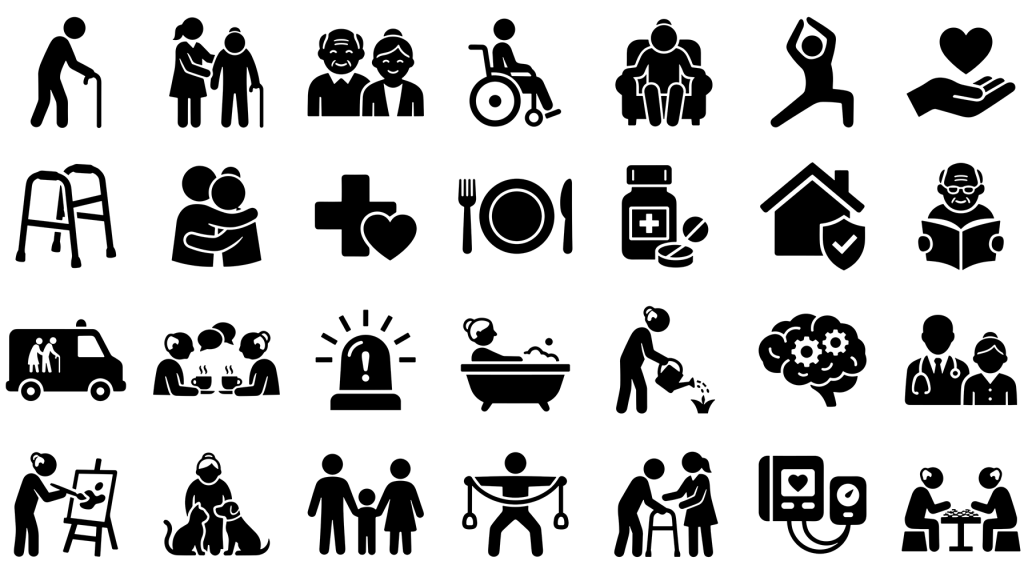
In total, IHSS is made up of 24 total service categories, not just the major personal care tasks most families think about first.
These include core services like ambulation, dressing, feeding, bowel and bladder care, bathing, paramedical services, and Protective Supervision, but they also include smaller or time-limited services such as meal preparation, laundry, shopping, accompaniment to medical appointments, heavy cleaning, yard hazard abatement, remove ice or snow, and teaching and demonstration time for caregivers learning how to safely perform care tasks.
Some of these categories are ongoing monthly services, while others are temporary, limited, or heavily capped by state guidelines. This is important because many families focus only on major areas like Protective Supervision or toileting and unintentionally leave hours behind by overlooking smaller service categories that still count toward the overall authorization.
IHSS is designed as a full picture of what it takes to safely keep someone at home, and every service area should be reviewed carefully during assessment—not just the obvious ones.
Here are some details—and hopefully some clarity—on 11 of the most common IHSS service areas.
Ambulation
Ambulation refers to movement—walking, getting around the home, navigating stairs, and safely moving from one place to another.
This includes things like helping a child get from their bedroom to the bathroom, helping them walk safely due to instability, or assisting them with mobility equipment. It can also include support getting in and out of vehicles for essential activities.
Keep in mind, the county looks at how often this help is needed and how physically involved the assistance is.
Transferring
Transferring is different from ambulation.
This refers to moving between positions:
- Bed to wheelchair
- Wheelchair to toilet
- Chair to standing
- Floor to bed
If lifting, stabilizing, or significant physical support is required, this becomes an important category for hours.
Something to remember: The more physically demanding the transfer, the stronger the case for time.
Feeding
Feeding means physically helping someone eat.
This includes bringing utensils to the mouth, hand-over-hand feeding, cutting food, monitoring swallowing risks, or full feeding assistance.
It does not mean cooking meals—that falls under meal preparation. It also usually does not include simple reminders like “finish your lunch” unless tied to a larger supervision issue.
For children with swallowing disorders, aspiration concerns, or severe motor limitations, feeding hours can become significant.
Meal Preparation and Cleanup
This includes preparing meals and cleaning up afterward. It covers the actual cooking, special diet preparation, and post-meal cleanup.
It does not cover elaborate household cooking for the whole family—it is tied to the recipient’s care needs.
If the recipient is a minor, the County also takes into consideration the type of cooking you would do for your children regardless of impairment.
Special diets, texture modifications, and medically necessary food preparation can strengthen this category for recipients of all ages.
Bathing, Hygiene, and Grooming
Bathing includes showering, bathing, brushing teeth, skin care, oral hygiene, hair care, and general personal cleanliness.
The county considers how often bathing assistance is needed and whether it involves full physical help, supervision for safety, or intensive skin care due to medical issues.
Children with seizure disorders, mobility limitations, or behavioral safety risks often require far more bathing assistance than counties initially account for.
Dressing
This category includes putting on and removing clothing, shoes, braces, orthotics, and other daily dressing needs.
The county evaluates fine motor skills, cognitive ability, range of motion, and whether dressing must be done entirely by the caregiver.
This area is often understated by families because they have normalized how much help they provide.
Bowel and Bladder Care
This is one of the most important categories in many cases.
It includes:
- Toileting
- Diapering
- Incontinence care
- Catheter care
- Cleaning after accidents
- Overnight care related to bowel or bladder needs
Frequency matters enormously here, as does being specific. Families often say “he needs diaper changes,” but the county needs to understand exactly how often, how long it takes, whether accidents require full clean-up, and whether it disrupts sleep overnight.
This category is commonly undercounted. Make sure the social worker understands what goes into this process each time.
Menstrual Care
This is often overlooked, especially for teenage girls with developmental or cognitive impairments.
IHSS can include menstrual hygiene support when significant assistance is required for managing hygiene, changing products, and maintaining safety and cleanliness.
Families should never leave this out simply because it feels uncomfortable to discuss. It matters.
Paramedical Services
This is one of the strongest opportunities for increasing hours.
Paramedical services are medically necessary tasks ordered by a doctor that would normally be performed by licensed medical staff if the parent or caregiver were not doing them.
Examples include:
- G-tube feeding
- Medication administration
- Seizure management
- Oxygen support
- Suctioning
- Injections
- Wound care
- Range-of-motion exercises prescribed by a physician
These services require completion of the SOC 321 form by the treating doctor.
This category is often the difference between average hours and meaningful hours.
Many families underestimate how powerful paramedical services can be. A good question to ask yourself is: “Would I be doing this if my child did not have a cognitive or physical impairment?”
Domestic and Related Services
These are the lower-hour categories like:
- Laundry
- Cleaning
- Grocery shopping
- Essential errands
These categories are heavily capped and usually do not drive major hour increases, but they still matter.
They should not be ignored so don’t let the social worker ignore them. Tell them how much you do in those areas due to the individuals impairment.
Protective Supervision (PS)
Protective Supervision is where the most confusion—and the most denied cases—happen.
Protective Supervision is not babysitting or general parenting. It is not supervision because a child is “busy” or “difficult.”
It is for individuals who are non-self-directing due to cognitive impairment or mental impairment and require 24-hour supervision to prevent injury. That’s it.
Some examples include:
- Elopement or wandering
- No awareness of danger
- Self-injurious behavior
- Unsafe climbing
- Turning on stoves or leaving the home unsafely
- Aggression without understanding consequences
- Severe impulsivity tied to cognitive impairment
But displaying these behaviors alone isn’t enough. Protective Supervision requires real documentation, incident history, and clear evidence that the child requires substantially more supervision than a typical child the same age.
This is where keeping incident logs becomes incredibly important.
When approved, PS can dramatically increase monthly hours and often determines whether a family reaches the severe impairment category.
What IHSS Does Not Cover
This is where expectations need to be realistic.
IHSS does not cover:
- ABA therapy
- Occupational therapy
- Physical therapy
- Speech therapy
- Educational support
- School advocacy
- Developmental progress programs
- General parenting
- Being “on standby” without a specific care task
- Emotional support alone
- 24-hour paid caregiving
- Medical care without physician authorization for paramedical services
This is often the hardest truth for families to hear. Just because something is exhausting does not mean IHSS counts it. It must fit within the county’s defined service categories.
And what “Severely Impaired” Actually Mean?
This classification matters because it opens the door to the 283-hour maximum.
A recipient may be considered severely impaired when their need across key personal care categories—like feeding, dressing, bathing, bowel and bladder care, mobility, and supervision—reaches state thresholds.
Protective Supervision often plays a major role here. This classification is not automatic. It must be supported through the assessment itself.
The Simplest Way to Explain IHSS
If you ever need to explain IHSS to another parent, this is the cleanest version:
IHSS does not pay for your child’s diagnosis. It pays for the specific hands-on help they need every day to safely live at home.
Task by task. Hour by hour. That is how counties think. And understanding that is how families stop leaving hours on the table.