The Thing I Was Most Afraid of Was the Thing That Helped Us Most
There are certain medical conversations that stop you in your tracks as a parent. You hear the doctor say the words, but your heart hears something else entirely.
For me, one of those moments was hearing that my son needed a G-tube button.
I remember the fear immediately. It felt enormous. I thought a feeding tube meant we were giving up on his chance to ever eat normally again. I worried it meant we were crossing into something permanent and heavy, something that would change the way I saw my child and the way the world would see him. I imagined something invasive, difficult to manage, painful for him, and emotionally impossible for me.
I worried about cleaning it. I worried about infections. I worried about how it would look. I worried that my son would suffer through a surgery for something I still was not emotionally ready to accept.
Most of all, I worried that agreeing to it somehow meant I was failing him.
I know now how many parents sit in that same fear.
And I also know how often that fear is rooted in misunderstanding.
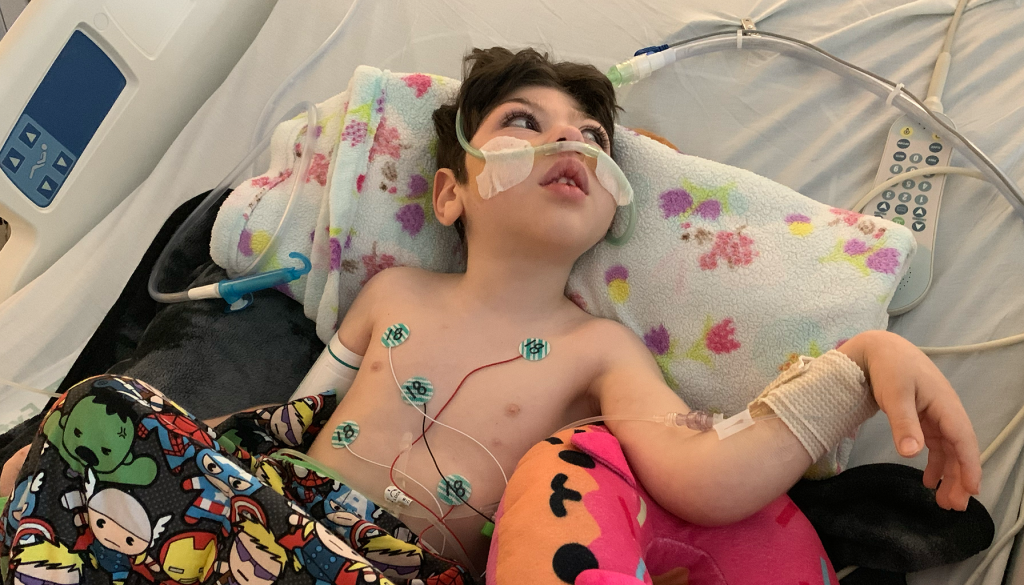
The truth is, the G-tube was not the thing that took something away from my son. It was the thing that gave so much back.
The procedure was done at UCLA Medical Center, and it was handled beautifully. Once the button was placed, we saw almost immediate improvement in his health. For the first time in a long time, he was consistently getting the nutrition his body actually needed. His medications for seizures, bowel issues, and everything else became dramatically easier to manage. Instead of fighting through oral medications, hoping enough stayed down, we finally had a safe and reliable way to care for him.
And then came the part no one had really explained to me enough: the freedom.
Before the G-tube, feeding could take hours. We were constantly trying to get enough food in him orally, only for him to vomit, aspirate, or simply not tolerate it. Every meal felt like stress. Every outing felt like a calculation. Travel felt overwhelming because feeding itself had become such a complicated and fragile part of life.
After the G-tube, feeding became calm.
It became controlled. Predictable. Safe.
It stopped being a daily battle and became simply part of caring for him. It did not hurt him. It did not make life smaller. It made life bigger.
We started going out more. We took trips. We were able to explore without feeling trapped by feeding schedules and fear. Eventually, we even started blending all of his real food, and now he is gaining weight, thriving, and healthier than he had been before.
What I once feared most became one of the greatest tools we had.
That is why I want parents to hear this clearly: getting a G-tube is not giving up.
Sometimes, it is finally giving your child relief.
What a G-Tube Actually Is
A gastrostomy tube, usually called a G-tube, is a small feeding tube placed directly into the stomach through the abdomen. It allows nutrition, hydration, and medication to be given safely when eating by mouth is difficult, unsafe, or simply not enough.
Many parents imagine something large, dramatic, and permanent.
In reality, once healed, a G-tube button often looks surprisingly small. I often explain it to parents like this: it is more like an earring with a purpose than some giant permanent medical device.
It sits flat against the body. It can be cleaned easily. It can be changed. And importantly, it can be removed.
If a child no longer needs it in the future, it does not mean they are committed to it forever. The body can often close the site on its own, or with minimal medical support if needed.
That understanding matters because so much of the fear comes from believing this is some irreversible decision. It is not.
It is a medical tool. And like many tools, it exists to make life safer and better.
The Procedure Is Serious—But It Is Not the Monster You Imagine
The reason a child needs a feeding tube is often serious. Poor weight gain, aspiration risk, neurological conditions, seizures, swallowing disorders, GI complications—these are heavy realities.
But the procedure itself is often much less dramatic than parents imagine.
A G-tube placement is commonly done under anesthesia, often laparoscopically or with endoscopic guidance depending on the child’s needs and hospital approach. Doctors create a small opening into the stomach and place the tube securely so feeds can begin safely.
There is healing time, of course. The area can be sore at first. Parents learn how to clean the site, rotate the button if needed, and watch for irritation or granulation tissue. Like anything involving your child’s body, it takes adjustment.
But most parents are surprised by how quickly it becomes normal.
The fear beforehand is often far bigger than the reality afterward.
Understanding the Difference Between a G-Tube and a J-Tube
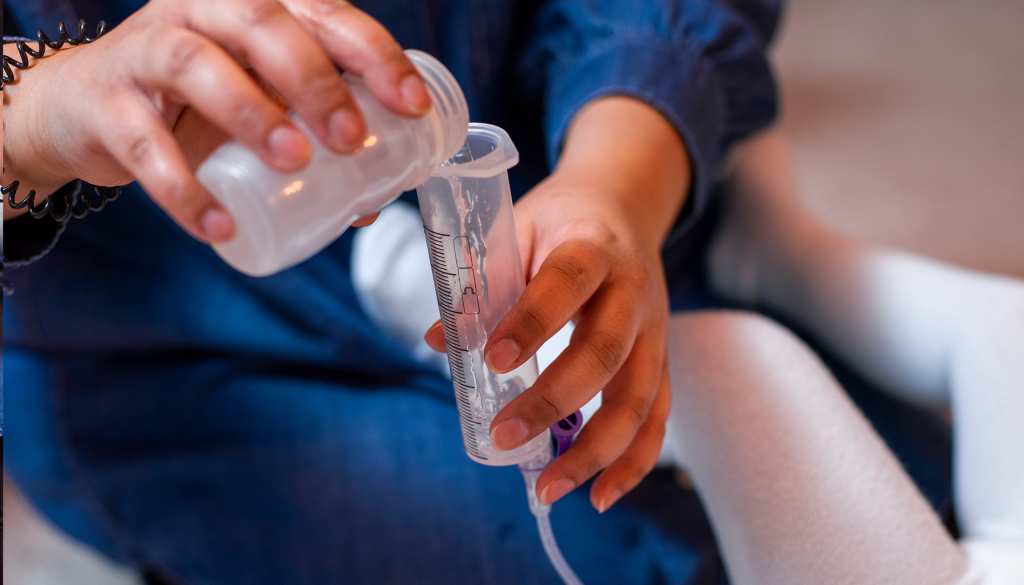
Not all feeding tubes are the same, and parents often hear multiple terms at once during already stressful appointments.
A G-tube goes directly into the stomach. This is the most common option and works well for children who can tolerate stomach feeds but need help getting nutrition safely and consistently.
A J-tube, or jejunostomy tube, goes further into the small intestine—specifically the jejunum. This is often used when a child cannot tolerate stomach feeds due to severe reflux, aspiration concerns, delayed gastric emptying, or other gastrointestinal complications.
Some children also have a GJ tube, which combines access to both the stomach and small intestine depending on medical need.
The right choice depends entirely on the child.
But regardless of the type, the goal is the same: safer feeding, better nutrition, and less daily suffering.
The Emotional Side No One Talks About Enough
The hardest part of a feeding tube is often not the surgery.
It is the grief.
Parents grieve the image they had of how feeding would look. They grieve normal milestones. They grieve the idea of family dinners that feel easy and effortless. They grieve the version of parenting they thought they would have.
That grief is real, and it deserves honesty. But grief and relief can exist at the same time. You can be heartbroken that your child needs medical support and deeply grateful that support exists.
Those feelings are not contradictory. They are parenting.
Especially in medically complex families, love often looks like making peace with the tools that help your child thrive, even when they were never part of the original plan.
To the Parent Sitting in That Fear Right Now
If someone recently told you your child may need a G-tube, and you are crying in the car after the appointment, I want you to know I understand.
I know how final it can sound. I know how heavy it feels. I know the guilt, the fear, and the silent thought that maybe agreeing means you have somehow failed. You have not.
Sometimes the bravest parenting decisions are the ones that look nothing like what we imagined.
Sometimes love looks like saying yes to the thing that scares you because your child needs you to see past your fear.
The G-tube did not take my son away from me. It gave him more comfort. More strength. More safety. More life. And it gave us freedom we did not realize we had been missing.
So if you are standing at that crossroads right now, scared of the button, scared of the surgery, scared of what it means—I hope this helps you breathe a little easier.
Because sometimes the thing that feels like the end of something is actually the beginning of something much better.